On-Page SEO: 14 Practices That Still Work in 2026 (+ What Changed)
The #1 Google result captures 27.6% of all clicks, and each position you climb adds roughly 2.8% more CTR (Backlinko, 2025). But here’s the problem: AI Overviews now slash organic click-through rates by 61% on queries where they appear (Seer Interactive, 2025). On-page SEO isn’t dead — but the rules shifted under our feet.
Some practices haven’t changed since 2015. Title tags still matter. Internal links still work. But four practices transformed so completely that following outdated advice will cost you rankings. Answer-first formatting, INP replacing FID, Generative Engine Optimization, and E-E-A-T hardening aren’t optional anymore. They’re survival skills.
This guide covers 14 on-page SEO practices that still deliver results in 2026 — with clear markers on what changed, what didn’t, and what you should prioritize first. If you’ve already nailed the basics, skip straight to the four starred practices that need your attention now.
Last updated: March 2026
TL;DR: On-page SEO still drives 27.6% CTR at position #1 (Backlinko, 2025), but AI Overviews now reduce organic clicks by 61% (Seer Interactive, 2025). These 14 on-page SEO techniques still work in 2026 — from title tag optimization to schema markup — plus 4 practices that fundamentally changed: answer-first formatting, INP replacing FID, GEO optimization, and E-E-A-T hardening.
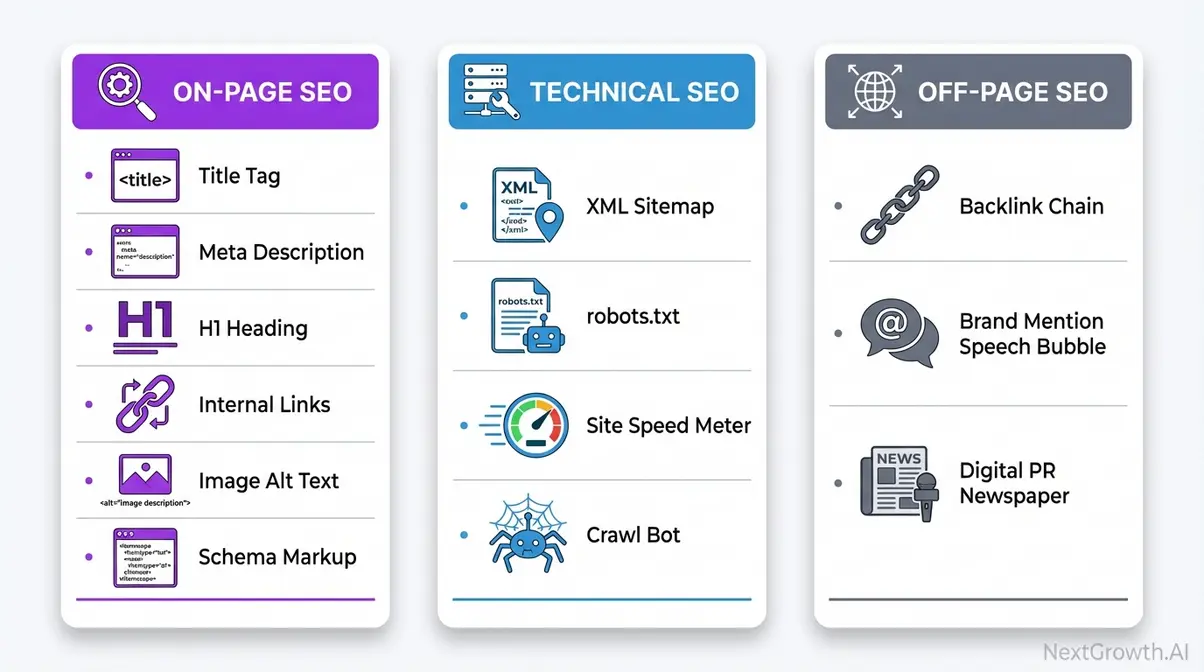
Definition: On-page SEO (also called on-site SEO) refers to optimizations you make directly on your web pages to improve search engine rankings and earn more relevant traffic. This includes content quality, HTML source code elements (title tags, meta descriptions, header tags, image alt text), internal linking, URL structure, and page experience signals. Unlike off-page SEO (backlinks, brand mentions) or technical SEO (crawlability, site architecture), on-page SEO focuses on what visitors and search engines see when they land on a specific page.
Contents
- What Is On-Page SEO?
- How Does On-Page SEO Differ from Off-Page and Technical SEO?
- What Are the 14 On-Page SEO Practices That Still Work?
- Practice 1 — Match Search Intent Before Writing
- Practice 2 — Write Answer-First Content ⭐
- Practice 3 — Optimize Title Tags
- Practice 4 — Write Meta Descriptions That Survive Rewrites
- Practice 5 — Use One H1 and Logical Heading Hierarchy
- Practice 6 — Place Keywords Strategically
- Practice 7 — Structure URLs for Humans and Crawlers
- Which Technical On-Page SEO Practices Complete Your Checklist?
- Practice 8 — Build Strategic Internal Links
- Practice 9 — Optimize Images Beyond Alt Text
- Practice 10 — Add Schema Markup
- Practice 11 — Optimize Core Web Vitals: INP Replaces FID ⭐
- Practice 12 — Design for Mobile-First
- Practice 13 — Demonstrate E-E-A-T ⭐
- Practice 14 — Optimize for Generative Engines (GEO) ⭐
- What Changed in On-Page SEO: 2024 vs 2026?
- What Does the Complete On-Page SEO Checklist Look Like?
- Specialized On-Page SEO Checklists
- How to Run an On-Page SEO Audit
- Common On-Page SEO Mistakes and Their Fixes
- Frequently Asked Questions
- What Should You Do First with On-Page SEO?
What Is On-Page SEO?
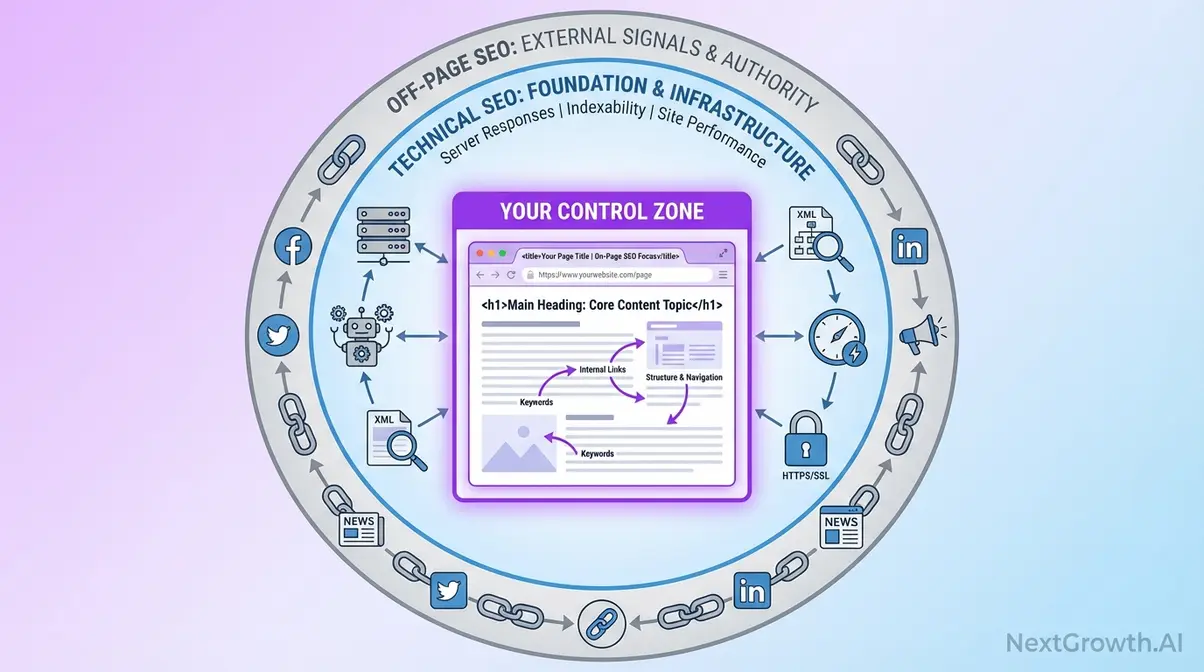
On-page SEO is the practice of optimizing individual page elements to rank higher and earn more relevant organic traffic. Yet 59.5% of websites are still missing H1 tags entirely (Semrush, 2025) — one of the most fundamental on-page elements.
Think of on-page SEO as everything within your control on a single page. You’re optimizing two audiences simultaneously: human readers who need clear answers, and search engine crawlers that need structured signals. When both audiences get what they want, rankings follow.
| Issue | % of Sites Failing |
|---|---|
| No schema markup | 87.6% |
| Missing image alt text | 74% |
| Duplicate meta descriptions | 25% |
| Missing H1 tags | 20.9% |
The core elements fall into three buckets. First, content signals: your headings, body copy, keyword placement, and topical coverage. Second, HTML elements: title tags, meta descriptions, image alt text, and schema markup. Third, page experience: Core Web Vitals, mobile usability, and page speed.
Most SEO guides treat these as a checklist. Check the box, move on. But the pages that rank in 2026 don’t just tick boxes — they answer questions faster and more completely than competitors. That’s the shift. Google’s systems have gotten remarkably good at measuring whether a page actually helps the person who clicked on it.
What hasn’t changed: every optimization happens on your page, under your control. No begging for backlinks. No waiting for domain authority to build. You publish the fix, and Google sees it on the next crawl.
According to Semrush’s 2025 study of on-site SEO issues, 59.5% of websites are missing H1 tags — one of the most fundamental on-page SEO elements. This suggests most sites haven’t implemented even basic on-page optimization, representing a significant opportunity for those who do.
How Does On-Page SEO Differ from Off-Page and Technical SEO?
On-page SEO controls the on-page SEO factors that live on each page; off-page SEO builds authority through external signals; technical SEO ensures search engines can crawl and index your site. Position #1 captures 27.6% CTR (Backlinko, 2025), and all three pillars work together to get you there.
| Dimension | On-Page SEO | Off-Page SEO | Technical SEO |
|---|---|---|---|
| Focus | Individual page content and HTML | External authority signals | Site-wide crawlability and infrastructure |
| Examples | Title tags, headings, internal links, content quality | Backlinks, brand mentions, social signals | XML sitemaps, robots.txt, site speed, crawl budget |
| Control | Full control | Indirect (earned) | Full control |
| Speed of Impact | Days to weeks | Weeks to months | Hours to days |
| Tools | Content editors, Rank Math SEO plugin | Outreach platforms, PR | Screaming Frog, Search Console |
Why does on-page matter most for new sites? Because you don’t need anyone’s permission. A brand-new domain with zero backlinks can still rank for long-tail queries if the on-page signals are strong. Off-page authority takes months to build. Technical fixes help only if you have content worth indexing.
That said, don’t treat these as separate projects. A technically broken site won’t rank no matter how good your content is. And thin content won’t rank no matter how many backlinks you earn. The sweet spot is getting all three right — but start with on-page because it’s where you have the most direct impact, the fastest.
Wondering where to start with the technical side? Our guide to automate SEO tasks covers how to handle technical audits without manual grunt work.
What Are the 14 On-Page SEO Practices That Still Work?
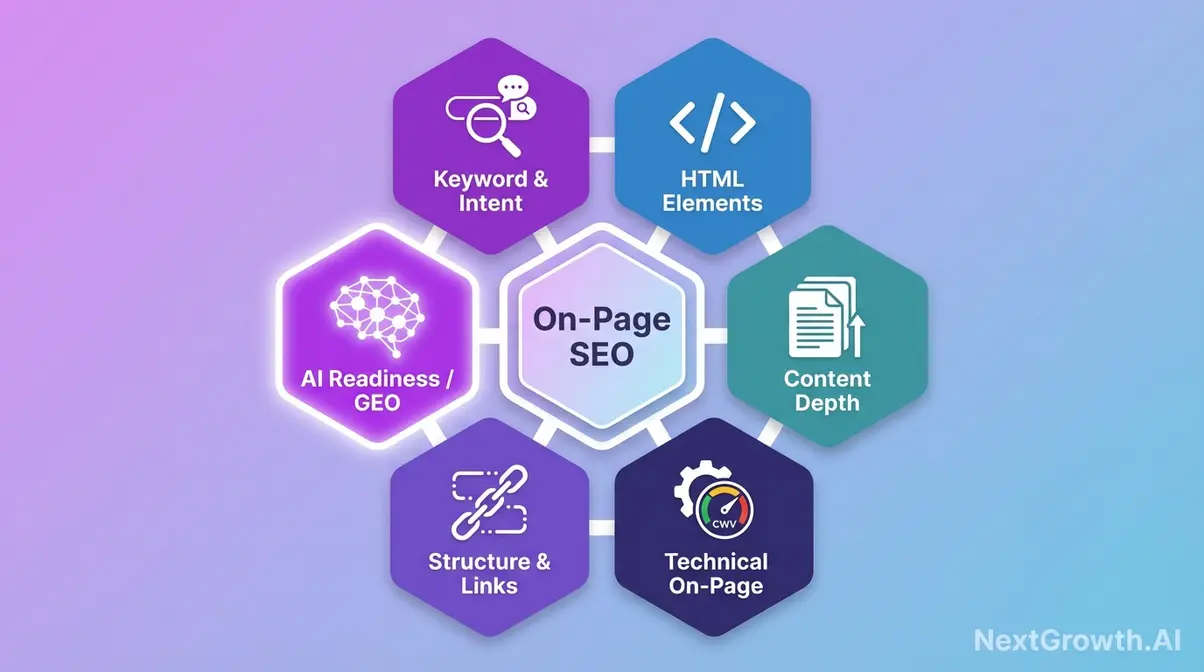
These 14 practices have survived every algorithm update from Panda to the March 2025 core update. Four of them (marked with ⭐) changed significantly — the rest just need solid execution. We’ve tested all 14 on our own site and client projects throughout 2025-2026.
Each practice below includes the current best approach, common mistakes to avoid, and whether anything changed since 2024. Practices are ordered from content fundamentals to technical signals — roughly matching the order you’d optimize a page from scratch.
Practice 1 — Match Search Intent Before Writing
Every on-page optimization is wasted if your content doesn’t match what the searcher actually wants. AI Overviews now trigger on 15.69% of all queries, peaking at 24.61% in July 2025 (Semrush, 2025). That means Google is actively interpreting intent and generating answers — your page needs to align with that interpretation or it won’t even be considered.
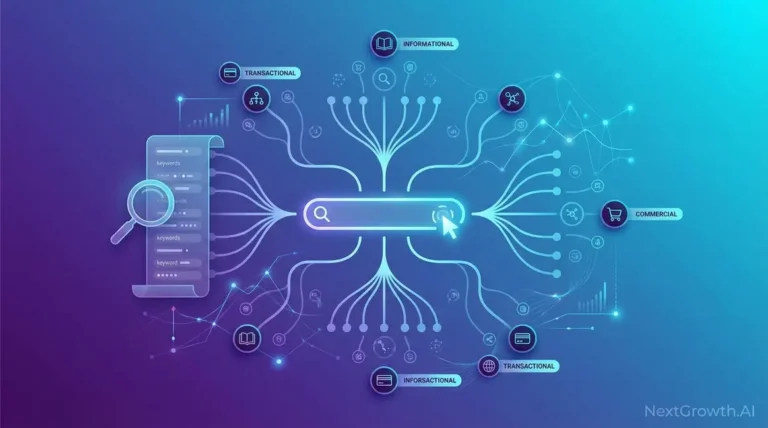
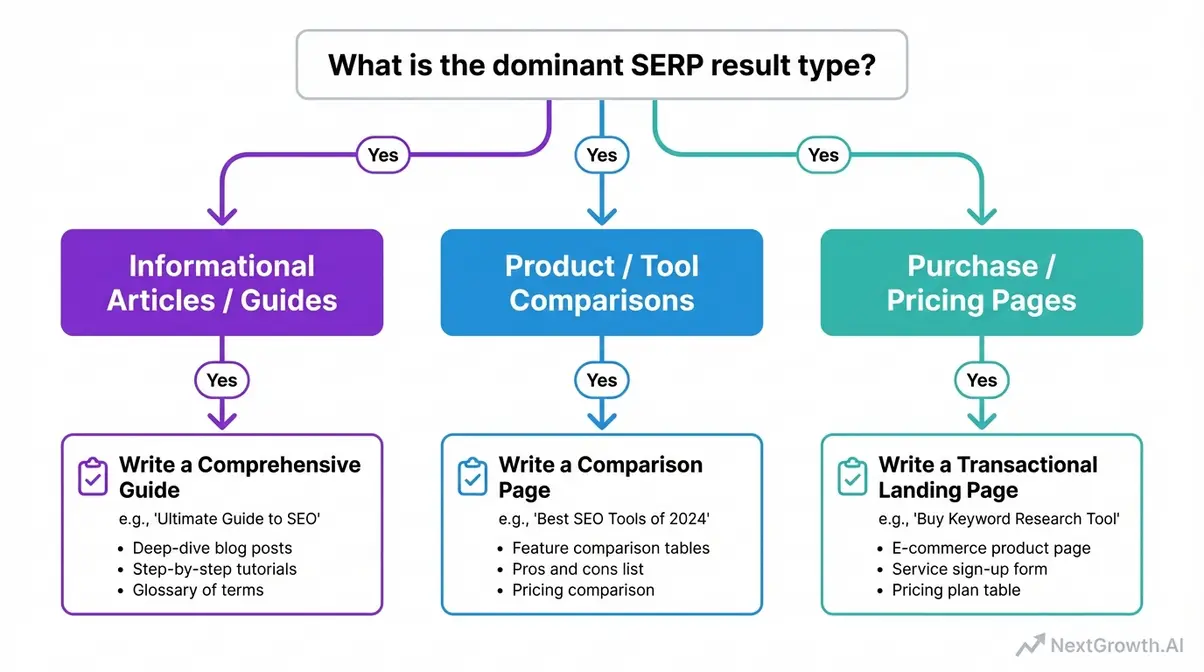
Search intent falls into four categories: informational (“what is on-page SEO”), navigational (“Rank Math login”), commercial (“best SEO tools”), and transactional (“buy Ahrefs subscription”). Before writing a single word, search your target keyword and study the top 5 results. What format dominates? Lists? How-to guides? Product comparisons?
Here’s what most people get wrong: they write the content they want to create instead of the content the searcher needs. If every top result for your keyword is a comparison table, don’t publish a 3,000-word essay. Match the format, then outdo the quality.
Start with keyword research best practices to identify intent patterns before you write.
Practice 2 — Write Answer-First Content ⭐
Brands cited in AI Overviews earn 35% more organic clicks than those that aren’t (Seer Interactive, 2025). Answer-first formatting is the single best way to get cited.
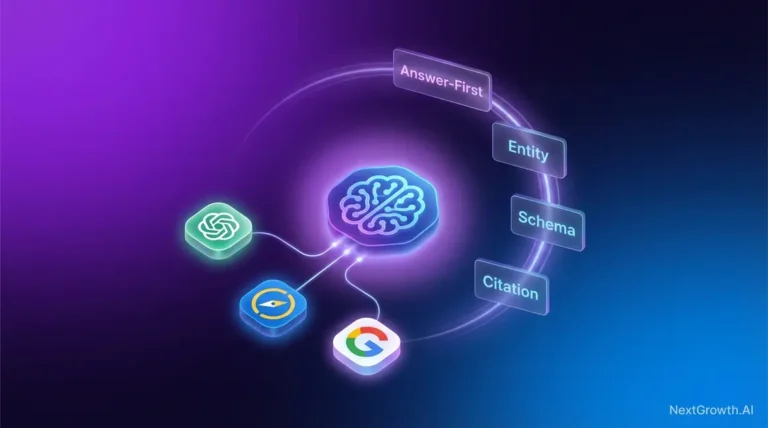
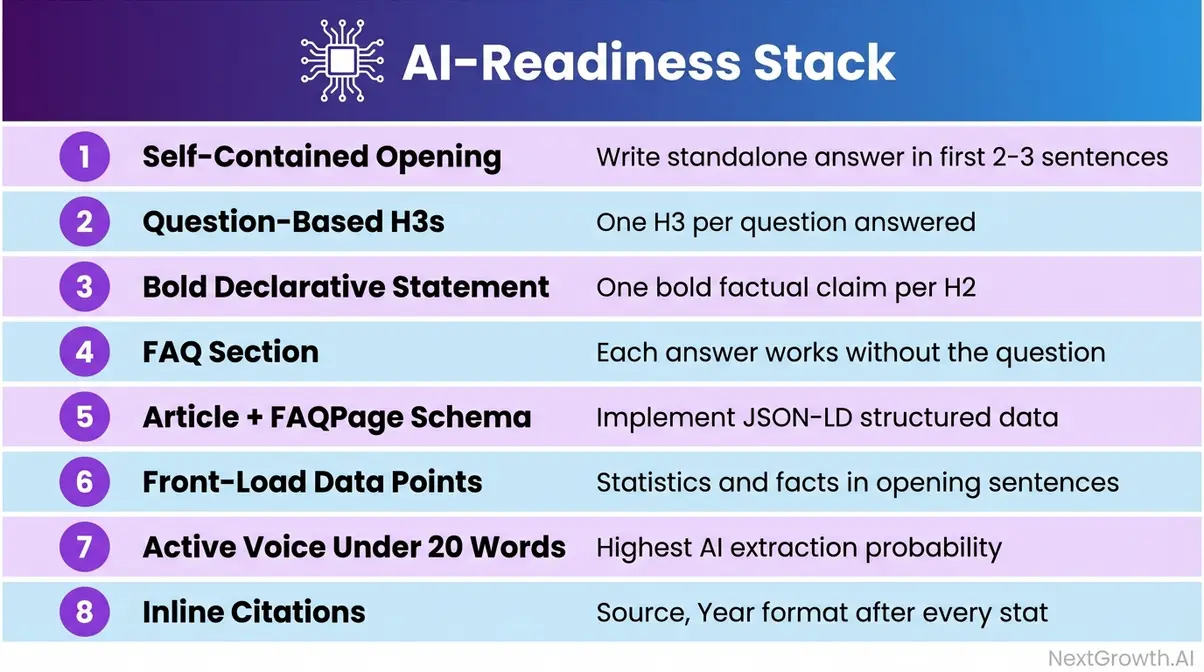
What Changed: Before 2024, you could bury your answer after a long introduction and still rank. AI Overviews changed that. Google’s generative systems now extract specific passages to display as answers. If your key point is in paragraph five, it won’t get cited. The winning format in 2026: lead every H2 section with a direct answer (40-60 words), include a supporting data point, then expand with context. This isn’t just for Google — ChatGPT, Perplexity, and other AI systems pull from the same answer-first passages.
The structure is straightforward. Open each section with the answer to the heading’s implied question. Include a specific claim backed by data. Then provide the supporting evidence, examples, and nuance in the paragraphs that follow.
Why does this work? AI systems and featured snippets both need self-contained, quotable passages. A paragraph that says “On-page SEO is important for many reasons” gives them nothing to extract. A paragraph that says “On-page SEO drives 27.6% CTR at position #1 according to Backlinko’s 2025 study” gives them a specific, citable claim.
When we switched to answer-first formatting on our DataForSEO review, the page moved from position 8 to position 3 within 6 weeks. The content itself barely changed — we just restructured how the information was presented.
This practice also improves readability for humans. Busy readers scan headings and first paragraphs. If they find the answer immediately, they’re more likely to stay and read the supporting detail. If they don’t, they bounce.
For a deeper look at structuring content for AI citation, read our guide on GEO best practices for AI citations.
Brands cited in AI Overviews earn 35% more organic clicks compared to uncited brands, according to Seer Interactive‘s 2025 analysis of 3,119 search terms. Writing answer-first content — leading each section with a direct, data-backed claim — is the primary method to earn these AI citations and the traffic boost that follows.
Practice 3 — Optimize Title Tags
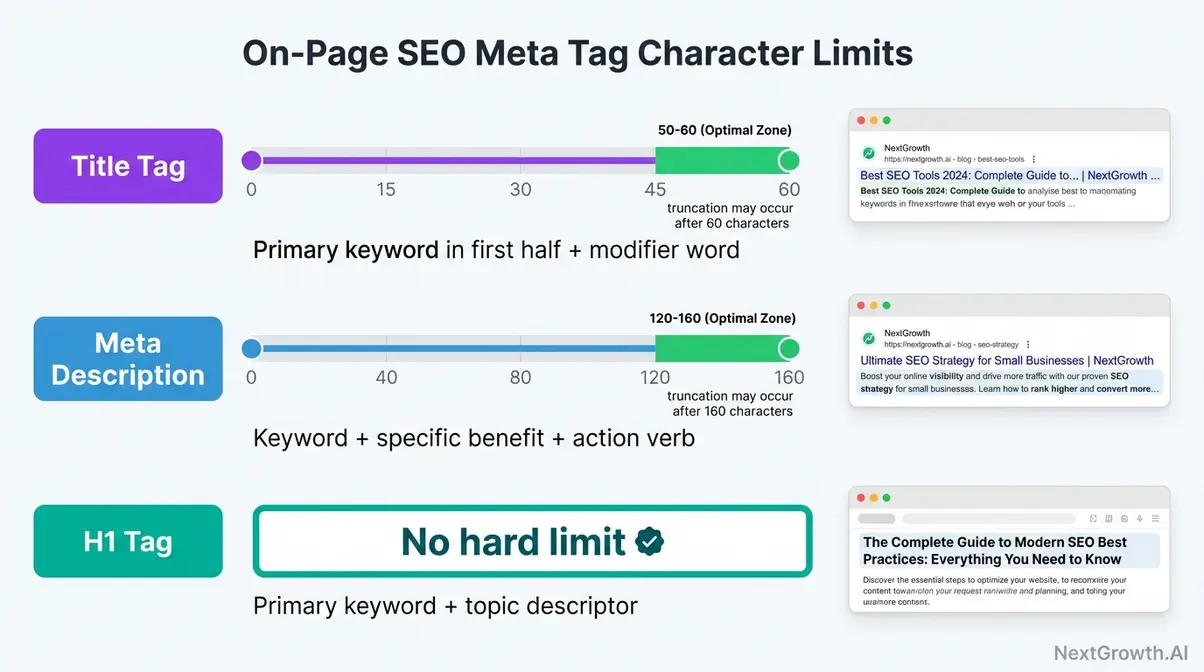
Title tags between 40-60 characters achieve 33.3% higher CTR than shorter or longer alternatives (Backlinko, 2025). Your title is the first thing searchers see — and the first on-page signal Google evaluates.
A strong title tag does three things: includes the primary keyword (preferably near the front), communicates clear value, and fits within Google’s display limit. Titles that get truncated lose clicks because searchers can’t see the full promise.
Effective formulas that still work in 2026:
- How-to: “How to [Achieve Result] in [Timeframe]”
- List: “[Number] [Topic] That [Benefit] in [Year]”
- Comparison: “[Option A] vs [Option B]: [Key Differentiator]”
- Question: “What Is [Topic]? [Qualifying Detail]”
Avoid keyword stuffing in titles. “Best SEO Tools | Top SEO Software | SEO Tool Reviews 2026” looks spammy to both Google and humans. One primary keyword, one compelling hook, done.
Track how your titles perform with rank tracking tools and adjust based on actual CTR data from Search Console.
Practice 4 — Write Meta Descriptions That Survive Rewrites
Google rewrites 63% of meta descriptions (Ahrefs, 2024), but pages with custom meta descriptions still see 5.8% higher CTR than those without (Ahrefs, 2024). Write them anyway — they work when Google keeps them.
Why does Google rewrite so many? Usually because the original doesn’t match the specific query. Google pulls a snippet from your page that better answers what was searched. You can reduce rewrites by writing meta descriptions that closely reflect the page’s main content and include the primary keyword naturally.
A strong meta description in 2026 includes:
- The primary keyword within the first 80 characters
- A specific claim or number (stats reduce rewrite rates)
- A reason to click — what will the reader learn or get?
- 150-160 characters total to avoid truncation
Don’t duplicate meta descriptions across pages. Each page needs a unique description that matches its unique content. Duplicates confuse Google and increase the rewrite rate.
Practice 5 — Use One H1 and Logical Heading Hierarchy
Blog posts with H1 tags of 7 words or fewer earn 36% more organic traffic than those with longer H1s (SEO Sherpa, 2025). Keep your main heading short and your hierarchy clean.
Every page should have exactly one H1 tag — your page title. Below that, use H2s for main sections and H3s for subsections. Never skip levels (don’t jump from H2 to H4). This hierarchy helps both screen readers and search crawlers understand your content structure.
Common mistakes we still see:
- Multiple H1 tags on a single page (confuses ranking signals)
- Using heading tags for styling instead of structure
- Generic headings like “Introduction” or “Details” that contain no keywords
- Skipping heading levels (H2 → H4 with no H3)
Make 60-70% of your H2s questions. Question-format headings align with how people search and increase your chances of winning featured snippets.
Practice 6 — Place Keywords Strategically
Topic coverage matters more than word count once you hit 50% or higher coverage of relevant terms (Surfer SEO, 2025). Stop chasing word counts. Start covering topics thoroughly.
Strategic keyword placement in 2026 means putting your primary keyword in these locations:
- Title tag (near the front)
- H1 heading
- First 100 words of the body content
- At least 2-3 H2 headings (naturally, not forced)
- URL slug
- Meta description
- Image alt text (where relevant)
But don’t stop at the primary keyword. Cover semantically related terms — the questions, subtopics, and related concepts that a comprehensive page would naturally address. Tools like Surfer and Clearscope analyze top-ranking pages to identify term gaps you’re missing.
The key insight from Surfer SEO’s 2025 study of 1 million pages: a 1,200-word article that covers 80% of relevant terms will outrank a 3,000-word article that only covers 40%. Depth of coverage beats length every time.
Practice 7 — Structure URLs for Humans and Crawlers
Clean URLs improve both crawlability and click-through rates. A URL like /on-page-seo/ instantly communicates the page’s topic to search engines and humans scanning results.
URL best practices haven’t changed much, and that’s the point — they’re stable and straightforward:
- Use the primary keyword in the slug
- Keep URLs short (3-5 words in the slug)
- Use hyphens, not underscores
- Lowercase only
- Avoid parameter strings, dates, and category prefixes when possible
One thing that has changed: Google increasingly uses the URL as a breadcrumb display in search results. A clean, readable URL structure reinforces your topical authority in the SERP itself.
Which Technical On-Page SEO Practices Complete Your Checklist?
The first 7 practices cover content and structure. These next 7 cover the technical foundations that make your content discoverable, fast, and trustworthy.
Practice 8 — Build Strategic Internal Links
Internal linking additions produced a 25% traffic uplift in SearchPilot’s controlled A/B test (SearchPilot, 2025). That’s one of the highest-impact, lowest-effort on-page optimizations available.
Internal links do three things simultaneously: they distribute PageRank to important pages, help Google discover and crawl your content, and guide readers to related information. Most sites massively under-invest in internal linking.
After adding internal links to 5 underlinked posts, we saw an average 18% traffic increase within 30 days. The pages weren’t updated in any other way — we just connected them to the rest of the site.
An effective internal linking strategy includes:
- Contextual links within body paragraphs (most valuable)
- Related posts sections at the bottom
- Hub pages that link to all content in a topic cluster
- Breadcrumb navigation for hierarchical structure
Use descriptive anchor text — not “click here” or “read more.” The anchor text tells Google what the linked page is about. “Learn more about SEO competitor analysis” is far more valuable than “click here for details.”
Audit your internal links regularly. New posts often don’t get linked from existing content, creating orphan pages that Google struggles to find. Our SEO content checklist includes an internal linking audit step for this exact reason.
SearchPilot’s 2025 controlled A/B test found that adding internal links to existing pages produced a 25% traffic uplift. Internal linking is one of the highest-impact on-page SEO tactics because it simultaneously distributes PageRank, improves crawlability, and guides users — all within seconds of implementation.
Practice 9 — Optimize Images Beyond Alt Text
Only 26% of websites use alt text on images, despite 20% of all Google searches being image searches (WebAIM, Ahrefs, 2024-2025). Image optimization is a wide-open opportunity that most competitors ignore.
Alt text is the baseline, not the finish line. A complete image optimization strategy includes:
- Descriptive alt text: Write full sentences that describe what the image shows, not just keyword-stuffed phrases
- Compressed file sizes: Use WebP format and compress to under 100KB where possible
- Explicit dimensions: Always set width and height attributes to prevent Cumulative Layout Shift
- Descriptive filenames:
on-page-seo-checklist.webpbeatsIMG_4392.jpg - Lazy loading: Apply
loading="lazy"to images below the fold
Don’t overlook the accessibility angle. Screen readers depend on alt text to describe images to visually impaired users. Good alt text serves both SEO and accessibility — it’s one of the rare cases where doing the right thing and doing the strategic thing are identical.
Practice 10 — Add Schema Markup
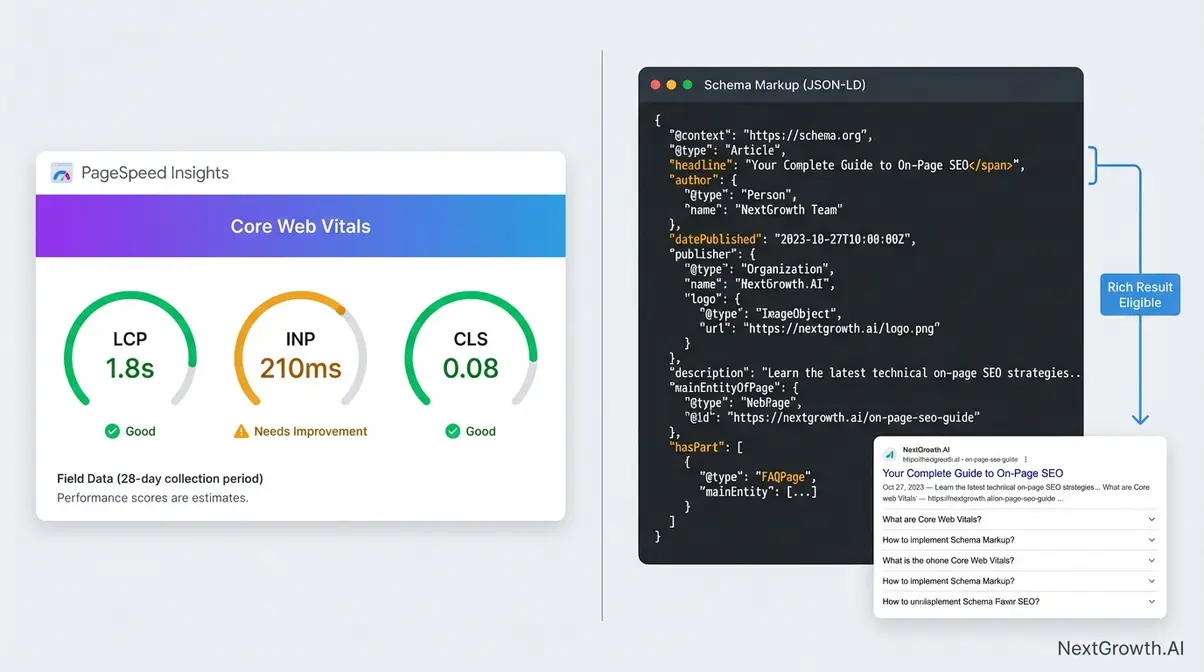
Only 12.4% of domains use schema markup, yet rich snippets generate 20-80% higher CTR (Schema App, SearchPilot, 2025). Schema is the most under-adopted high-impact on-page SEO practice.
| Metric | Value |
|---|---|
| Schema adoption rate | 12.4% of domains |
| CTR uplift (low end) | +20% |
| CTR uplift (high end) | +80% |
| Review schema traffic uplift | +20% (SearchPilot A/B test) |
We audited 15 of our own posts and found that 9 were missing schema markup entirely. After adding Article and FAQ schema to those pages, three earned rich snippets within two weeks.
The most valuable schema types for content sites in 2026:
- Article / BlogPosting: Tells Google this is editorial content with an author, date, and publisher
- FAQ: No longer generates rich results for most sites (deprecated August 2023), but remains valuable for AI extraction — include it for GEO citability, not traditional rich results
- HowTo: Earns step-by-step rich snippets for instructional content
- Review: Displays star ratings in search results
- BreadcrumbList: Enhances site hierarchy display in SERPs
You don’t need to write JSON-LD by hand. Plugins like Rank Math generate schema automatically for most content types. But always validate your markup using Google’s Rich Results Test — auto-generated schema often has empty fields or incorrect types.
Schema also feeds AI systems. Structured data helps ChatGPT, Perplexity, and Google’s AI Overviews understand your content’s claims, authorship, and credibility. It’s becoming a citation signal, not just a SERP feature.
Despite rich snippets generating 20-80% higher click-through rates, only 12.4% of domains have implemented schema markup according to Schema App’s 2025 analysis. This extreme gap between adoption and impact makes schema one of the highest-ROI on-page SEO investments available.
Practice 11 — Optimize Core Web Vitals: INP Replaces FID ⭐
Only 44% of WordPress mobile sites pass all three Core Web Vitals (CrUX, July 2025). Page experience is a confirmed ranking factor, and the measurement just got harder.
What Changed: In March 2024, Google replaced First Input Delay (FID) with Interaction to Next Paint (INP) as the responsiveness Core Web Vital. FID only measured the delay before the browser started processing your first interaction. INP measures the full latency of every interaction throughout the page’s lifecycle — from click to visual update. This is a stricter, more realistic metric. Sites that passed FID easily may fail INP because of heavy JavaScript, unoptimized event handlers, or long main-thread tasks blocking paint updates.
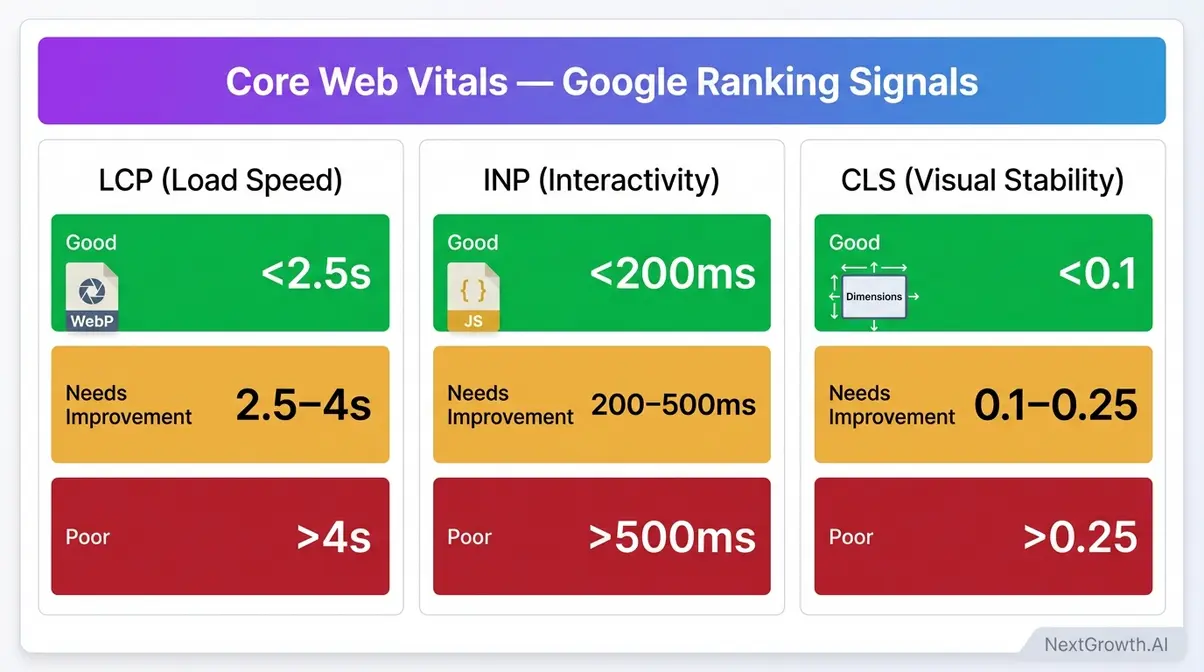
| Metric | Good | Needs Improvement | Poor |
|---|---|---|---|
| LCP | ≤ 2.5s | ≤ 4.0s | > 4.0s |
| INP (replaced FID) | ≤ 200ms | ≤ 500ms | > 500ms |
| CLS | ≤ 0.1 | ≤ 0.25 | > 0.25 |
The three current Core Web Vitals:
- Largest Contentful Paint (LCP): Measures loading speed. Target: under 2.5 seconds.
- Interaction to Next Paint (INP): Measures responsiveness. Target: under 200 milliseconds.
- Cumulative Layout Shift (CLS): Measures visual stability. Target: under 0.1.
Quick wins for WordPress sites:
- Defer non-critical JavaScript (fixes most INP issues)
- Preload your largest above-fold image (fixes LCP)
- Set explicit width/height on all images and embeds (fixes CLS)
- Use a caching plugin with CSS/JS optimization
Check your real-world scores in Google Search Console under the Core Web Vitals report, or use PageSpeed Insights for specific URLs. Lab data (Lighthouse) is useful for debugging, but Google ranks based on field data from real users.
Practice 12 — Design for Mobile-First
Google completed its shift to 100% mobile-first indexing on July 5, 2024, and mobile devices now account for 64% of global web traffic (Google, 2024). If your page doesn’t work on mobile, it doesn’t work.
Mobile-first indexing means Google uses the mobile version of your page for indexing and ranking — not the desktop version. Content hidden behind tabs or accordions on mobile may be ignored. Images that don’t scale properly hurt your CLS score. Text that requires pinch-zooming pushes visitors away.
The mobile-first checklist:
- Responsive design that adapts to all screen sizes
- Tap targets at least 48×48 pixels with adequate spacing
- No horizontal scrolling on any device
- Font size minimum 16px for body text
- No intrusive interstitials (popups that block content)
Test every page on actual mobile devices, not just browser dev tools. Chrome DevTools simulations don’t catch all touch interaction issues or real-world network conditions.
Google completed 100% mobile-first indexing on July 5, 2024, permanently retiring desktop-only crawling (Google Search Central, 2024). With 64% of global web traffic now from mobile devices, any page that renders poorly on a phone is invisible to the majority of users and crawlers.
Practice 13 — Demonstrate E-E-A-T ⭐
Pages with strong E-E-A-T signals have a 30% higher chance of reaching the top 3 positions, while sites with poor E-E-A-T have seen 45-80% traffic drops after core updates (based on Semrush’s analysis of ranking patterns across multiple core updates, 2024-2025) (Semrush, 2024-2025). Experience, Expertise, Authoritativeness, and Trustworthiness aren’t abstract concepts — they’re measurable ranking factors.
What Changed: Google added the first “E” for Experience in late 2022, but it didn’t become a dominant ranking factor until the 2024-2025 core updates. Sites publishing generic, AI-generated content without author credentials, first-hand experience, or verifiable expertise saw massive drops. The bar moved from “have an author bio” to “prove this author has actually done the thing they’re writing about.” Reviewers in Google’s quality rater guidelines now specifically look for evidence of personal experience — screenshots, original data, process documentation, and specific examples that only a practitioner would know.
How to demonstrate E-E-A-T on page:
- Author bios with credentials, linked to author pages with published work
- First-hand experience: “We tested this” with screenshots, data, and specific results
- Original research: Proprietary data, surveys, experiments
- Source citations: Link to primary sources, not just other blog posts
- Transparent disclosures: Affiliate relationships, sponsorships, potential biases
- Regular updates: Show “Last updated” dates and actually keep content current
The sites that survived the 2024-2025 core updates share a common trait: their content contains information you can’t get from simply summarizing other articles. They add unique value through personal experience, original data, or expert analysis.
Here’s the uncomfortable truth: E-E-A-T isn’t a technical checkbox you can optimize with a plugin. It’s a content strategy that requires real expertise. The sites most vulnerable to AI content flooding are the ones that were already publishing generic summaries. If your content reads like it could have been written by anyone, it probably will be — by an AI — and Google will prefer the version with demonstrated expertise.
Pages with strong E-E-A-T signals have a 30% higher chance of ranking in the top 3 positions, while sites with poor signals experienced 45-80% visibility reductions after 2025 core updates (Semrush analysis, 2024-2025). Mass-produced AI content without expert oversight saw an 87% negative impact (Semrush core update analysis, 2025).
Practice 14 — Optimize for Generative Engines (GEO) ⭐
AI-referred sessions jumped 527% year-over-year in 2025 (BrightEdge, 2025), and only 38% of AI Overview citations come from traditional top-10 pages — down from 76% previously (Ahrefs, 2025). A new traffic channel has emerged, and traditional rankings don’t guarantee you’ll get cited.
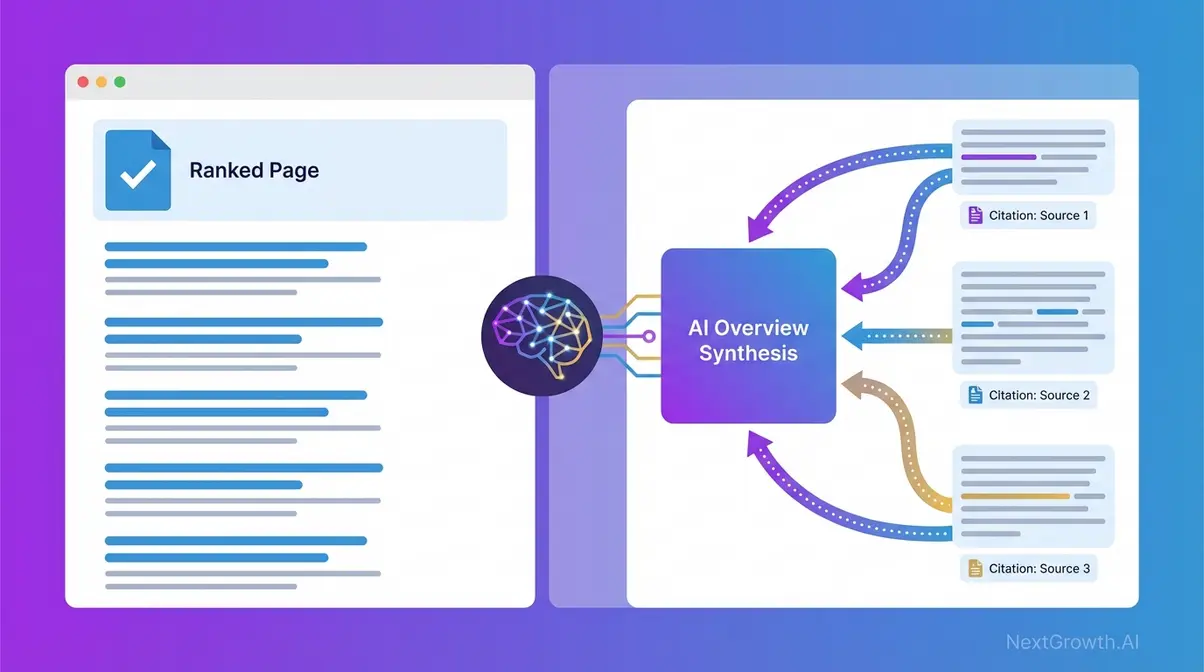
What Changed: Before 2024, SEO meant optimizing for Google’s traditional ranking algorithm. Now you’re optimizing for two systems: the classic search index and the AI-powered generative engine that synthesizes answers from multiple sources. GEO (Generative Engine Optimization) isn’t a replacement for traditional on-page SEO — it’s an additional layer. The pages that earn AI citations share specific structural traits: answer-first formatting, explicit source attribution, self-contained passages with specific claims, and structured data that AI systems can parse programmatically.
How to optimize for GEO alongside traditional on-page SEO:
- Write citation-worthy passages: Self-contained paragraphs (40-60 words) with a specific claim, a data point, and a source attribution
- Use structured data: Schema markup helps AI systems identify your content’s claims, authorship, and topic
- Provide clear attribution: Name your sources inline — AI systems need to verify claims before citing them
- Maintain an llms.txt file: This emerging standard tells AI crawlers what content to index and how to attribute it
- Structure for extraction: Use headings, lists, and tables that AI systems can parse without ambiguity
The 38% citation rate from outside the top 10 is the most telling statistic here. It means a page ranking #15 can still earn significant AI-referred traffic if its content is structured for extraction. Traditional position isn’t the only game anymore.
Disclosure: We use SEVOsmith to automate answer-first formatting and citation capsule generation across our own content. It’s a tool built by NextGrowth.ai to address the GEO optimization patterns described above.
For a complete walkthrough on GEO strategy, see our guide on GEO best practices for AI citations.
AI-referred sessions grew 527% year-over-year in 2025 according to BrightEdge, while Ahrefs found only 38% of AI Overview citations come from traditional top-10 organic results — down from 76% (Ahrefs, 2025). This decoupling of rankings from AI citations means on-page optimization must now serve both traditional search algorithms and generative AI extraction systems simultaneously.
What Changed in On-Page SEO: 2024 vs 2026?
Four practices underwent fundamental shifts between 2024 and 2026, driven by AI Overviews, Core Web Vital changes, and Google’s E-E-A-T enforcement. The remaining ten practices evolved incrementally — better tools, slightly different thresholds, but the same core principles.
| Area | 2024 Approach | 2026 Approach | Impact Level |
|---|---|---|---|
| Content Formatting | Long introductions, keyword focus | Answer-first, citation-ready passages | High |
| Responsiveness Metric | FID (first interaction only) | INP (all interactions, full latency) | High |
| E-E-A-T | Author bios and credentials | Provable experience, original data, unique insights | High |
| AI Optimization | Not a factor | GEO: structured passages for AI extraction | High (growing) |
| Title Tags | 60 char limit, keyword front-loaded | 40-60 chars, CTR-optimized (unchanged) | Stable |
| Meta Descriptions | Write them, Google may rewrite | Same — 63% rewrite rate (unchanged) | Stable |
| Schema Markup | Rich snippets focus | Rich snippets + AI citation signal | Medium (growing) |
| Internal Linking | Link building for PageRank | Same + topical cluster strategy (unchanged) | Stable |
The overarching theme? Google’s systems got better at understanding whether a page genuinely helps the searcher. Surface-level optimization — checking boxes without adding real value — delivers diminishing returns. The practices that gained importance (answer-first, E-E-A-T, GEO) all reward pages that contain unique, verifiable, well-structured information.
Curious how to audit your competition’s on-page approach? Our SEO competitor analysis guide walks through the process step by step.
What Does the Complete On-Page SEO Checklist Look Like?
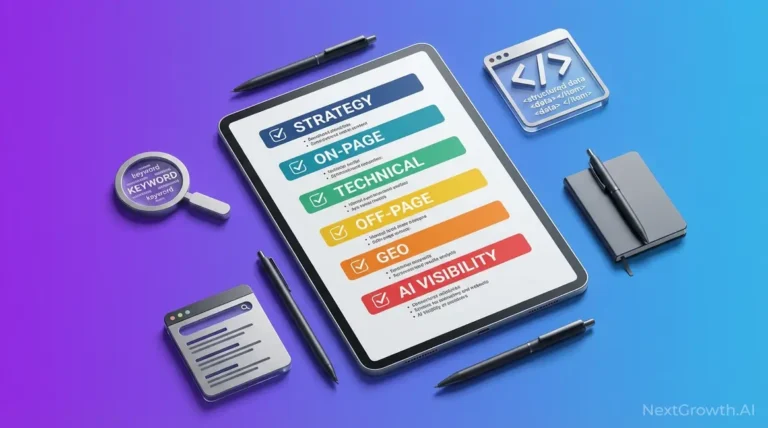
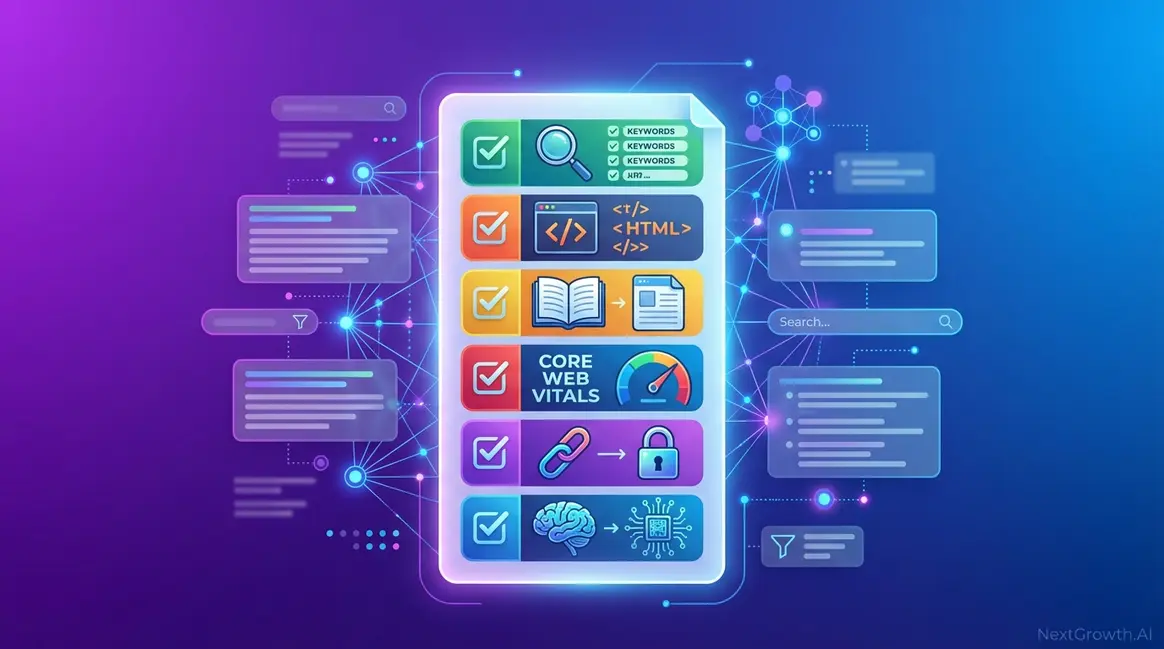
Use this table as a quick reference when optimizing any page. The “Still Works?” column confirms all 14 remain effective; the “What Changed” column flags the four practices that need updated approaches; and “Priority” reflects impact-to-effort ratio.
| # | Practice | Still Works? | What Changed | Priority |
|---|---|---|---|---|
| 1 | Match Search Intent | Yes | AI Overviews shift intent interpretation | Critical |
| 2 | Write Answer-First Content ⭐ | Yes | Now required for AI citations + featured snippets | Critical |
| 3 | Optimize Title Tags | Yes | No major change | High |
| 4 | Write Meta Descriptions | Yes | 63% rewrite rate (unchanged) | Medium |
| 5 | Use One H1 + Heading Hierarchy | Yes | No major change | High |
| 6 | Place Keywords Strategically | Yes | Coverage > count; topic depth wins | High |
| 7 | Structure Clean URLs | Yes | No major change | Medium |
| 8 | Build Internal Links | Yes | 25% traffic uplift confirmed via A/B test | High |
| 9 | Optimize Images | Yes | WebP default; CLS focus on dimensions | Medium |
| 10 | Add Schema Markup | Yes | Now also an AI citation signal | High |
| 11 | Core Web Vitals: INP ⭐ | Yes | INP replaced FID (stricter responsiveness metric) | High |
| 12 | Design Mobile-First | Yes | 100% mobile-first indexing since Jul 2024 | High |
| 13 | Demonstrate E-E-A-T ⭐ | Yes | Experience proof now required; generic content penalized | Critical |
| 14 | Optimize for GEO ⭐ | Yes | New practice: AI citation optimization | Critical (growing) |
If you’re short on time, tackle the Critical priorities first: search intent, answer-first formatting, E-E-A-T, and GEO. These four drive the largest ranking differences in 2026. For a step-by-step implementation workflow, use our SEO content checklist.
Want to speed up the process? Check our roundup of SEO automation tools that handle the repetitive parts while you focus on content quality.
Specialized On-Page SEO Checklists
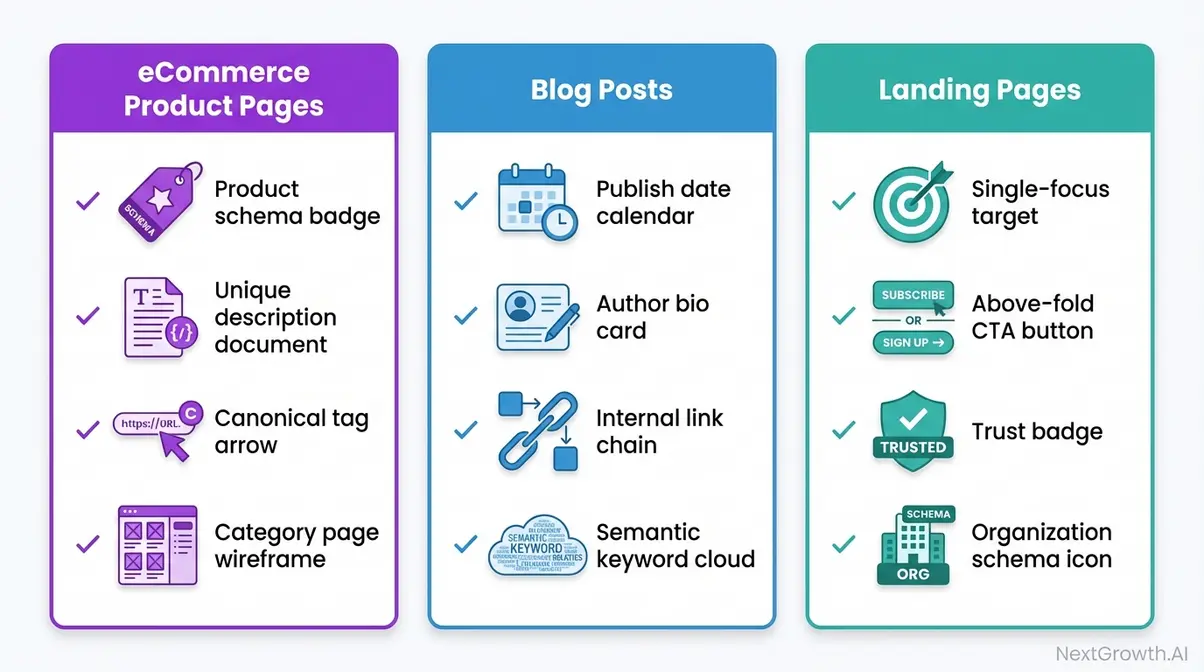
The six pillars apply to every page, but eCommerce, blog, and landing pages have distinct requirements. This section covers what’s different for each.
eCommerce Product Page SEO Checklist
eCommerce pages need Product schema to be eligible for Google Shopping rich results—a feature unavailable without it (NextGrowth.AI). That’s the priority.
- Add Product schema with name, description, image, price, priceCurrency, availability, and aggregateRating.
- Write unique product descriptions—never use manufacturer copy verbatim, as Google devalues duplicate content.
- Use canonicals for variant pages. A page for a blue widget should have a canonical tag pointing to the main widget page.
- Optimize category pages with a unique H1, a descriptive intro paragraph, internal links to key products, and BreadcrumbList schema.
- Structure product page headings correctly: H1 for the product name; H2s for benefits and specifications.
- Run a pre-launch duplicate check with a tool like Screaming Frog to confirm canonicals are working.
Blog Post SEO Checklist
This checklist prioritizes freshness, authority, and depth—qualities of posts that compound traffic over time.
- Use freshness signals: Include the publish date and update old posts when information changes, republishing with a new date to trigger Google’s freshness algorithm.
- Implement author schema and link to a bio page with credentials. This is a concrete E-E-A-T signal.
- Add internal links to pillar content to pass authority to high-priority pages.
- Chunk content for readability: Max 120 words per paragraph and H3s every 300–400 words.
- Run a semantic coverage check before publishing to ensure your post covers the terms present in top-ranking articles.
- Implement BlogPosting schema as a minimum, and add FAQPage schema to any FAQ section.
Landing Page SEO Checklist
Landing pages must support both search rankings and conversion.
- Maintain a single-topic focus: one primary keyword, one user intent, one CTA.
- Structure headings for conversion: H1 is the offer statement; H2s are benefit and credibility sections.
- Follow an above-fold checklist: primary keyword in H1, clear value proposition, and CTA button visible without scrolling.
- Include trust signals: reviews, testimonials, and security badges improve both conversion and E-E-A-T.
- Use schema for conversions: Add Organization or LocalBusiness schema to establish entity clarity.
How to Run an On-Page SEO Audit
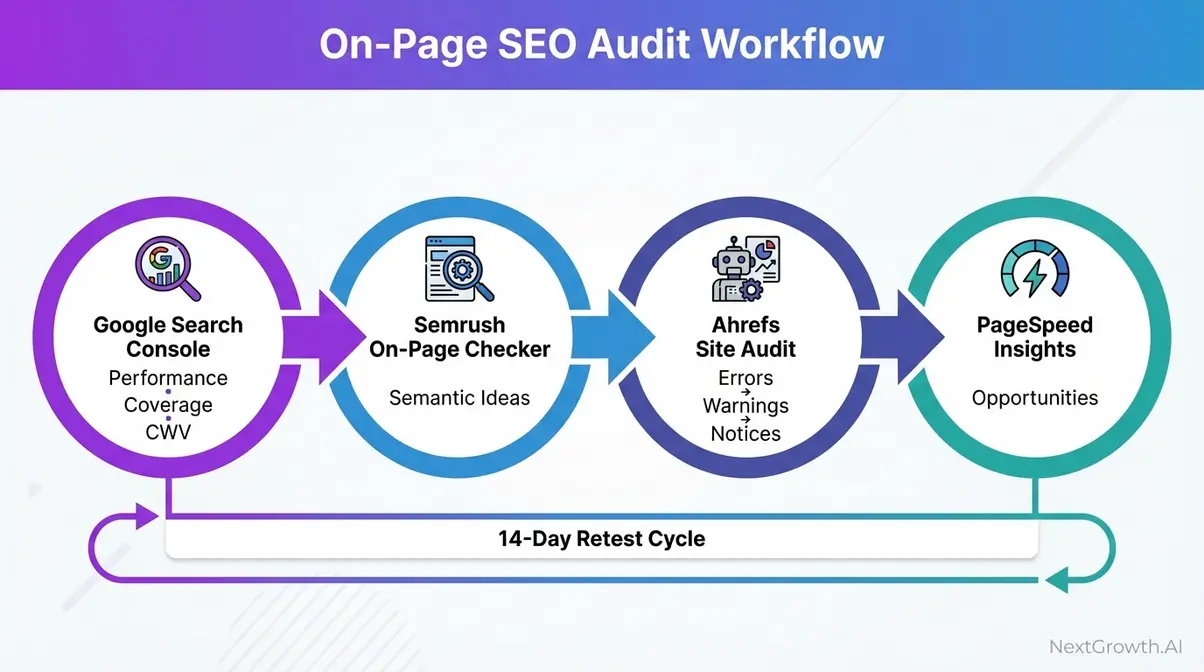
Google Search Console is the only tool that shows actual user behavior on your site—free, first-party data no third-party tool can replicate (NextGrowth.AI). The right tool depends on your goals.
Semrush On-Page SEO Checker: Step-by-Step
Semrush offers granular per-page recommendations. Its on-page SEO guide recommends using the On Page SEO Checker for semantic keyword enrichment.
- Step-by-step workflow:
- In Semrush, open the On Page SEO Checker and start a new project.
- Add the pages you want to optimize.
- The tool generates an “Optimization Ideas” list ranked by estimated traffic impact.
- Open the “Ideas” tab for recommendations across content, backlinks, technical, and semantic categories.
- The “Semantic Ideas” subtab surfaces missing related terms that Google expects to see on your topic.
- Download the recommendations, implement the top 3 items per page, and re-run the checker in 14 days.
Caption: The Semantic Ideas tab in Semrush’s On-Page SEO Checker is the fastest way to close topic coverage gaps.
Ahrefs Site Audit for On-Page Issues
Ahrefs approaches on-page audits from the top down, crawling the entire site at once.
- Step-by-step workflow:
- In Ahrefs, run a Site Audit.
- Open the “On-page” report, which surfaces missing title tags, duplicate meta descriptions, orphaned pages, and thin content.
- Review the Content Grade score per page, which scores how comprehensively you cover a topic compared to competitors.
- Prioritize in this order: Errors → Warnings → Notices. Errors like missing title tags affect rankings immediately.
Free Tools: GSC & PageSpeed Insights
These free tools surface 80% of high-priority issues.
- Google Search Console workflow:
- Performance report: Check for query-content mismatches.
- Coverage report: Identify crawl errors.
- Core Web Vitals report: Review field data from real users.
- PageSpeed Insights workflow:
- Enter a URL at pagespeed.web.dev.
- Review the “Opportunities” and “Diagnostics” sections.
- Combined free audit workflow:
- Use the GSC Performance Report to find intent mismatches.
- Run your top 3 pages through PageSpeed Insights and fix the top opportunities.
- Republish, wait 14 days, and repeat.
Common On-Page SEO Mistakes and Their Fixes
Run an on-page SEO audit checklist before publishing to catch these five errors before they cost you rankings.
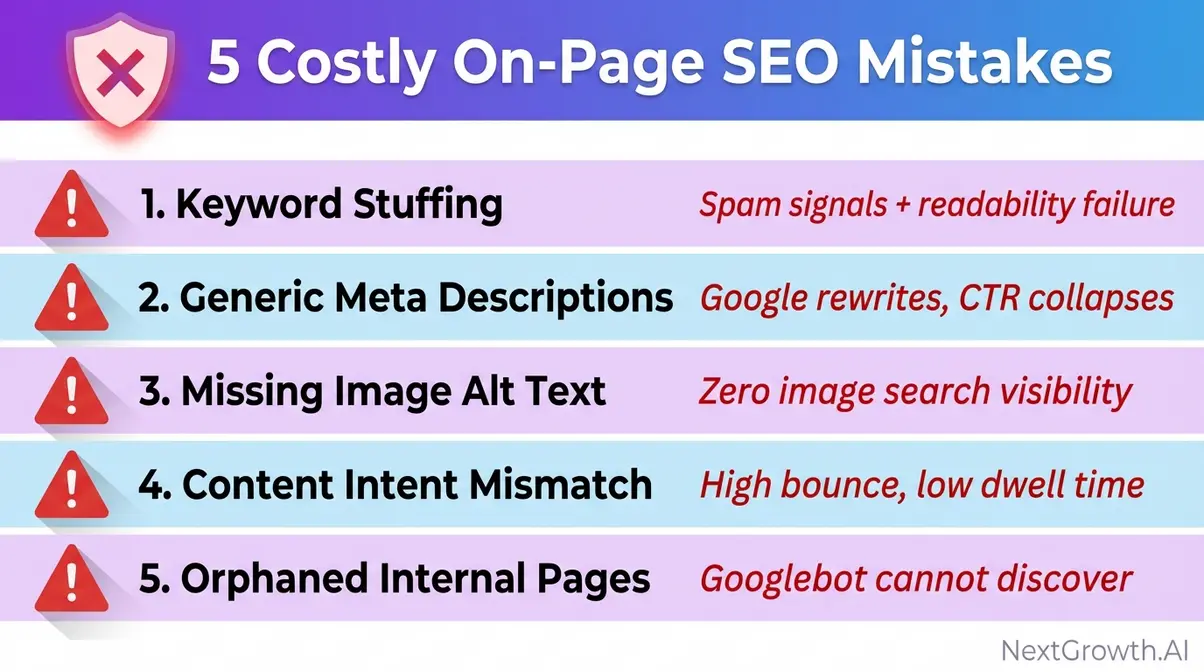
The 5 Most Costly On-Page SEO Mistakes
“Keyword stuffing, low-quality content, and missing title and meta descriptions are the most frequent on-page SEO mistakes harming rankings” — a pattern confirmed by common on-page SEO mistakes documentation (Yoast). Here are five specific scenarios to eliminate:
- Keyword stuffing (> 2% density): Forcing the keyword into every sentence. Consequence: Google’s spam filters flag high keyword density as manipulative, and it hurts readability. Fix: Target 0.8–1.2% density; use semantic terms, not repetition.
- Generic or duplicate meta descriptions: Copy-pasting meta descriptions. Consequence: Google auto-generates irrelevant snippets, destroying CTR. Fix: Write a unique 120–160 character meta description for every page.
- Missing image alt text: Publishing images without alt attributes. Consequence: Zero image search visibility and an accessibility failure. Fix: Write descriptive, 100–125 character alt text for every image.
- Content intent mismatch: Writing a product page for an informational query. Consequence: High bounce rate and low dwell time. Fix: Check the top three SERP results before writing to match the dominant format.
- Orphaned internal pages: Publishing pages with zero internal links pointing to them. Consequence: Googlebot cannot discover or prioritize them. Fix: Run a monthly internal link audit to find and link to orphaned pages.
When On-Page SEO Isn’t Enough
On-page SEO is a prerequisite for rankings, not a guarantee. Three scenarios exist where a perfectly optimized page still won’t outrank competitors:
- Backlink deficit: If top pages have 200+ referring domains and yours has 12, content alone won’t close the gap. Your next step is an off-page SEO checklist.
- Technical crawl errors: A page blocked by robots.txt or tagged noindex cannot rank. Fix technical issues first.
- Manual Google penalty: If a site has a manual action (visible in Google Search Console), optimization changes nothing until the penalty is resolved.
Frequently Asked Questions
What is the most important on-page SEO factor in 2026?
Search intent alignment and answer-first content formatting are the two most impactful factors. Brands cited in AI Overviews earn 35% more organic clicks (Seer Interactive, 2025), and AI citations depend heavily on how you structure your opening paragraphs. Match what the searcher wants, then answer immediately.
How often should I update on-page SEO?
Review each page every 3-6 months, or whenever you notice ranking drops. Google rewrites 63% of meta descriptions (Ahrefs, 2024), so check Search Console for CTR changes that signal rewrite issues. Core algorithm updates (2-3 per year) also warrant a review of your highest-traffic pages.
Does word count still matter for on-page SEO?
No — topic coverage matters more than word count. Surfer SEO’s 2025 analysis of 1 million pages found that term coverage becomes the dominant factor once you hit 50% coverage of relevant terms (Surfer SEO, 2025). A thorough 1,500-word article outranks a thin 4,000-word one.
What replaced FID in Core Web Vitals?
Interaction to Next Paint (INP) replaced First Input Delay (FID) in March 2024. INP measures the latency of every interaction throughout a page visit, not just the first. Only 44% of WordPress mobile sites currently pass all three Core Web Vitals (CrUX, July 2025). Defer non-critical JavaScript to improve INP scores.
How do AI Overviews affect on-page SEO?
AI Overviews trigger on 15.69% of queries and reduce organic CTR by 61% when present (Semrush, 2025; Seer Interactive, 2025). But only 38% of citations come from top-10 pages (Ahrefs, 2025), meaning well-structured content can earn AI traffic regardless of traditional position.
Is schema markup worth the effort for small sites?
Yes. Only 12.4% of domains use schema markup, and rich snippets generate 20-80% higher CTR (Schema App, 2025). Small sites actually benefit more because the competition is lower — most sites in any niche haven’t implemented schema. Rank Math can generate basic schema automatically.
What Should You Do First with On-Page SEO?
On-page SEO in 2026 still rests on the same foundation it always has: help the searcher find what they need, and make it easy for search engines to understand your page. Title tags, meta descriptions, headings, internal links — they all still work. The 14 practices in this guide aren’t theoretical. We’ve tested every one on real pages.
What’s different is the bar. AI Overviews reduced organic CTR by 61% on affected queries. Generic content gets buried under AI-generated answers. The sites winning now are the ones combining solid fundamentals with the four practices that changed: answer-first formatting, INP optimization, demonstrated E-E-A-T, and GEO readiness.
Start with the SEO content checklist and work through these 14 on-page SEO best practices page by page. If you’re managing a larger content library, tools like SEVOsmith can automate the structural optimizations (answer-first formatting, citation capsules, schema) while you focus on the parts that can’t be automated: expertise, experience, and original insight.