DataForSEO Review and API Guide: Pay-As-You-Go SEO Data (2026)
Contents
- What is DataForSEO? Platform Overview
- API Functionality & Technical Documentation
- Pricing, Reviews, and Value Proposition
- Specialized Products: MCP Server & DataForSEO Labs
- No-Code Integrations & Workflow Automation
- Real-World Results: Case Studies & ROI
- When DataForSEO May Not Be the Right Fit
- Frequently Asked Questions
- Your Next Steps with DataForSEO
If you’ve ever felt locked into a $200+ monthly subscription just to pull keyword data for a client project, you understand the frustration of paying for features you’ll never use. Traditional SEO platforms bundle everything together—rank tracking, site audits, backlink analysis, content tools—whether you need them or not. For developers building custom applications or agencies running high-volume data operations, this model creates unnecessary overhead and limits flexibility.
The cost of inflexibility compounds quickly. You hit API rate limits mid-project. You pay for 10,000 keyword lookups when you only need 500. You can’t integrate the data into your existing tech stack without expensive workarounds. Meanwhile, your competitors who’ve found more efficient data sources are shipping features faster and serving clients at lower cost.
DataForSEO offers a fundamentally different approach: a pay-as-you-go API platform built specifically for developers and data-driven marketers who need direct access to SEO data without the subscription bloat. Instead of paying monthly fees for a dashboard you’ll never open, you pay only for the API calls you actually make.
This guide provides everything you need to evaluate and implement DataForSEO effectively. You’ll learn exactly how the API architecture works, see transparent pricing comparisons against Semrush and Ahrefs for equivalent tasks, review real case studies with documented ROI, and get step-by-step guidance for both code-based and no-code integrations.
Key Takeaway
DataForSEO is a comprehensive API platform providing real-time SEO data on a flexible pay-as-you-go basis, making it ideal for developers and agencies building custom tools.
- Offers 50+ APIs covering SERP, keywords, backlinks, on-page, and business data
- Pay-as-you-go model starts at $50 minimum with no monthly subscription
- Free sandbox environment for testing before spending credits
- Integrates with Make.com, n8n, Google Sheets, and ChatGPT without code
- Used by 2,000+ companies including agencies reporting 35% customer growth
📝 Written by: The Minh Nguyen
✅ Reviewed by: The Minh Nguyen
📅 Last updated: 29 December 2025
ℹ️ Transparency Notice
This article explores DataForSEO’s API platform based on official documentation, verified user reviews, and published case studies. Some links in this article may connect to our products or services. All information presented has been verified against official sources and reviewed by our technical team. Our goal is to provide accurate, helpful information to developers and marketers evaluating SEO data solutions.
What is DataForSEO? Platform Overview
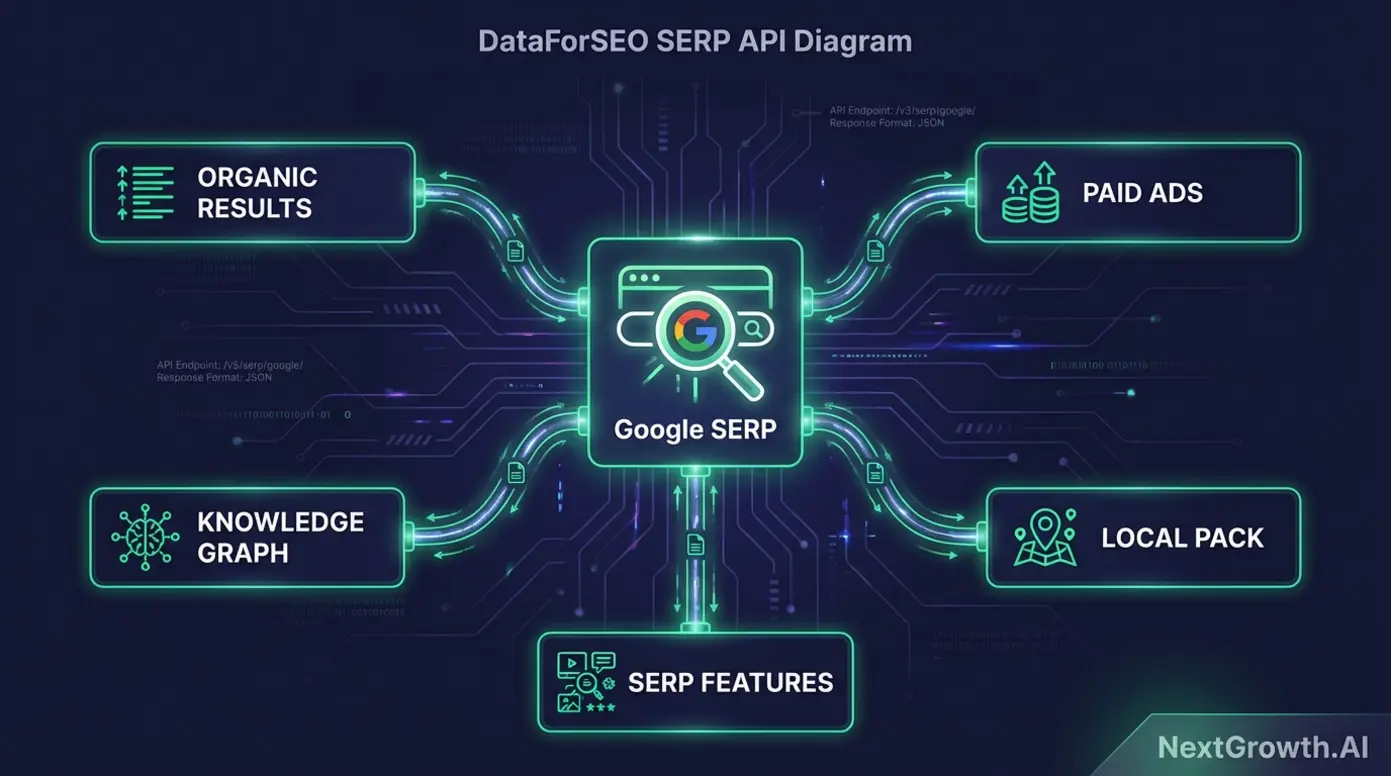
DataForSEO is an API-first SEO data platform that provides programmatic access to search engine results, keyword metrics, backlink data, and business information. Founded in 2017, the company now serves over 2,000 companies globally, ranging from individual developers building side projects to enterprise teams running large-scale data operations.
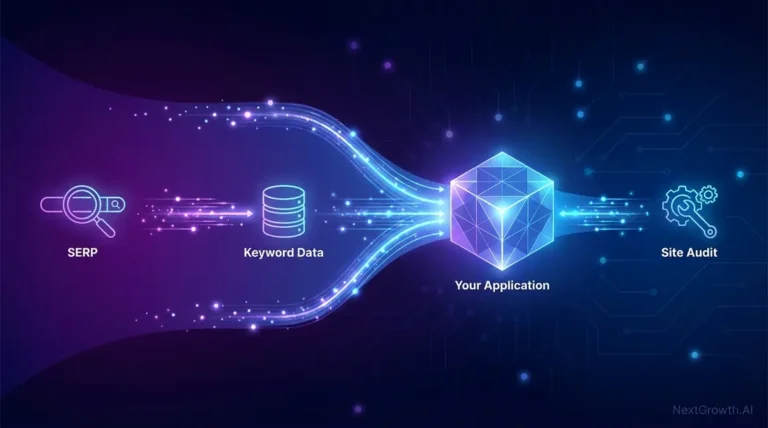
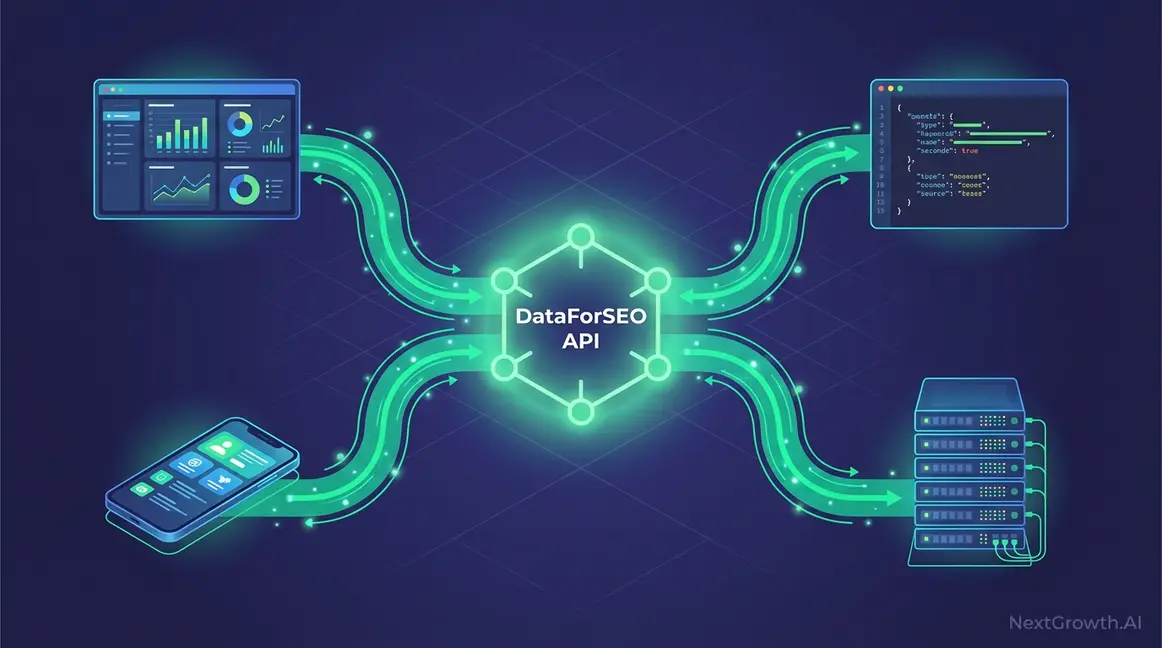
What distinguishes DataForSEO from traditional SEO tools like Semrush or Ahrefs is its fundamental architecture. While those platforms are GUI-based applications with APIs added as secondary features, DataForSEO was built API-first from day one. There’s no dashboard lock-in—you get raw data access designed for integration into your own applications, dashboards, or automation workflows.
The platform’s data coverage spans 50+ APIs organized across major SEO categories. You can pull real-time search results from Google, Bing, Yahoo, and Baidu. You can access keyword metrics including search volume, difficulty scores, and trend data. The backlinks database provides referring domain analysis and anchor text distribution. On-page APIs handle technical audits and content analysis, while business data APIs cover Google Business Profile information and reviews.
In terms of scale and reliability, DataForSEO processes billions of API requests monthly and maintains a 99.9% uptime SLA. This positions the platform as infrastructure for SEO tools rather than a tool itself—you’re building on top of their data layer rather than working within their interface constraints.
Core API Products and Data Coverage
DataForSEO organizes its powerful API stack into distinct product categories, each serving specific data needs. Understanding this structure helps you identify which endpoints match your requirements.
| API Category | Primary Data Type | Key Use Cases |
|---|---|---|
| SERP API | Real-time search results | Rank tracking, SERP feature monitoring, competitor analysis |
| Keywords Data API | Volume, difficulty, suggestions | Keyword research, content planning, PPC optimization |
| Backlinks API | Link profiles, referring domains | Link building, competitive analysis, penalty recovery |
| On-Page API | Technical SEO metrics | Site audits, content optimization, crawl analysis |
| Business Data API | Google Business Profile, reviews | Local SEO, reputation monitoring, competitor research |
The official API documentation provides detailed specifications for each endpoint, including request parameters, response formats, and credit costs. Most developers start with the SERP API for rank tracking or the Keywords Data API for research workflows, then expand to additional endpoints as their applications mature.
Who Uses DataForSEO? Ideal User Profiles
DataForSEO serves several distinct user segments, each leveraging the platform differently based on their technical capabilities and business requirements.
Developers building custom SEO tools represent the core user base. These are engineers creating SaaS products, internal tools, or client-facing applications that require reliable SEO data. They value direct API access, comprehensive documentation, and predictable pricing based on actual usage.
Agencies needing white-label data use DataForSEO to power client reporting without exposing the data source. The raw API output integrates cleanly into custom dashboards and branded reports, allowing agencies to present data-driven SEO tools as proprietary capabilities.
Enterprise teams requiring high-volume automation benefit from the platform’s scalability. When you need to track rankings for 100,000 keywords daily or monitor backlink profiles across thousands of domains, the pay-as-you-go model often proves more cost-effective than subscription alternatives with fixed limits.
Marketers seeking no-code alternatives can access DataForSEO data through integrations with Make.com, n8n, and Google Sheets. These users may not write code themselves but still benefit from the comprehensive data solutions available through visual workflow builders.
API Functionality & Technical Documentation
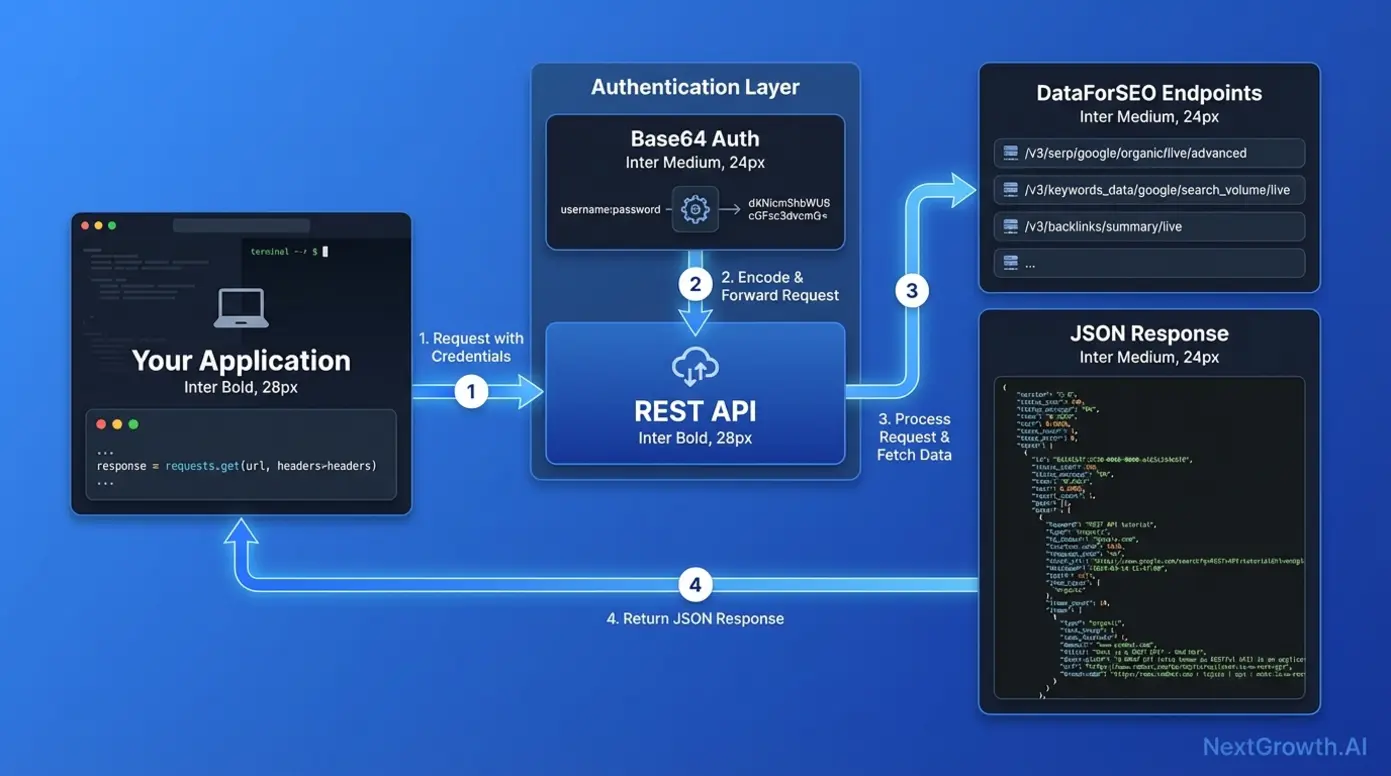
DataForSEO uses REST API architecture for seamless data interchange between your applications and their service. This matters for developers because REST is language-agnostic—you can make requests from Python, JavaScript, PHP, Ruby, or any language that supports HTTP calls. The standardized approach means you’re not locked into specific SDKs or proprietary protocols.
The official documentation states that the “DataForSEO API is using the REST technology for interchanging data between your application and our service.” This architecture supports both synchronous requests (immediate response) and asynchronous operations (callback-based) for high-volume tasks that require queuing.
Authentication follows industry-standard practices using Base64-encoded credentials. You generate an API key in your dashboard, encode your login and password, and include the authorization header with each request. The process is straightforward for developers familiar with REST APIs and well-documented for those new to API integration.
For testing and development, DataForSEO provides a sandbox environment that mirrors production functionality without consuming credits. This risk-free testing approach lets you validate your integration logic, experiment with different endpoints, and debug issues before committing real budget to API calls.
The Complete API Stack: SERP, Keywords, Backlinks & More
The DataForSEO API covers the full spectrum of SEO data requirements. Each API category provides specialized endpoints optimized for specific use cases.
| API Name | Data Points Available | Typical Use Case | Starting Price per Request |
|---|---|---|---|
| SERP API | Rankings, SERP features, AI Overviews | Real-time rank tracking, competitor monitoring | $0.0015 |
| Keywords Data API | Volume, CPC, competition, trends | Keyword research, content planning | $0.05 per 1,000 keywords |
| Backlinks API | Links, referring domains, anchors | Link profile analysis, outreach targeting | $0.002 |
| On-Page API | Technical metrics, content scores | Site audits, optimization recommendations | $0.001 |
| DataForSEO Labs API | Keyword gaps, competitor data | Competitive intelligence, market analysis | Varies by endpoint |
The Backlinks API deserves particular attention for its transparent link scoring algorithm. Unlike proprietary metrics from other providers, DataForSEO’s scoring methodology is documented and “understood by any software developer,” enabling more informed link-building and SEO decisions based on transparent criteria.
Getting Started: API Authentication & Sandbox Testing
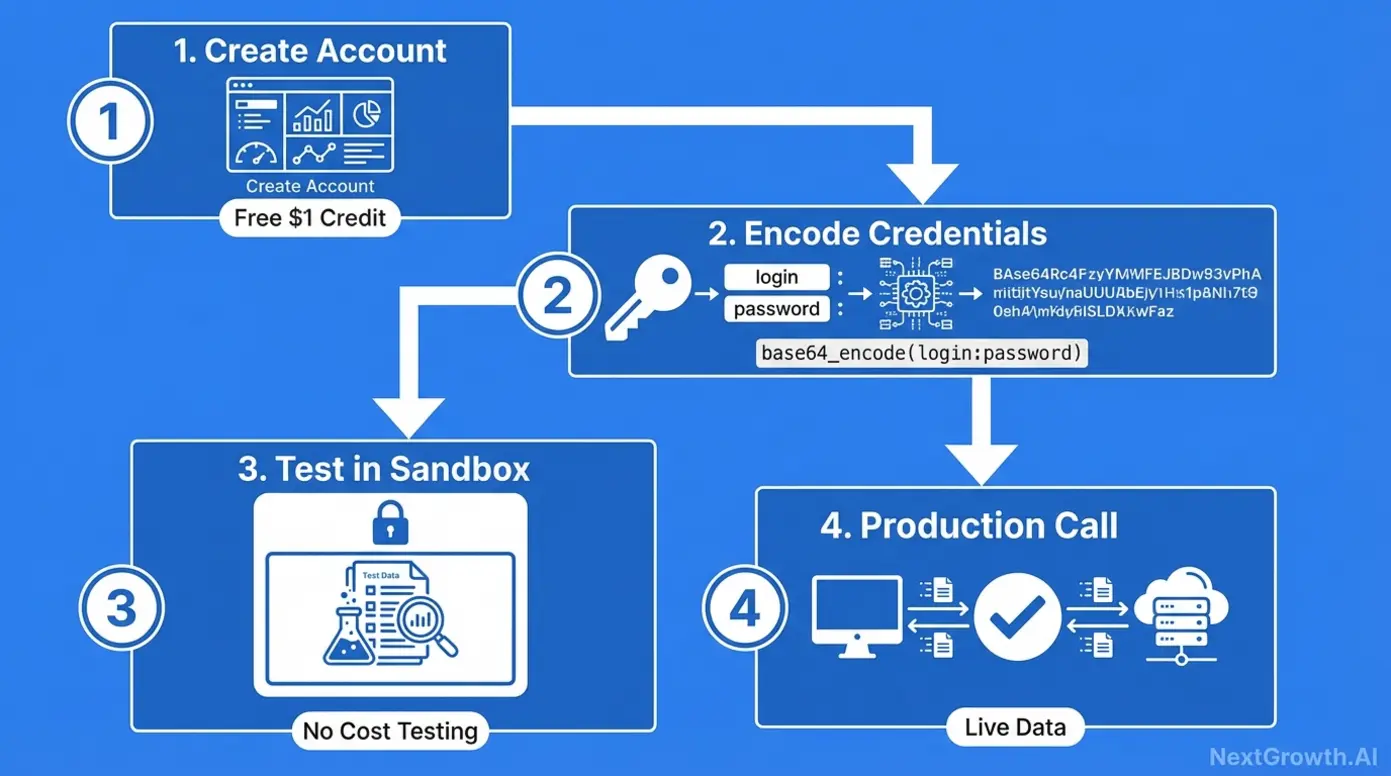
Setting up your DataForSEO integration follows a clear sequence that gets you from account creation to first API call in minutes.
Step 1: Create your account. Sign up at DataForSEO.com and access your dashboard. New accounts receive $1 in trial credits for initial testing.
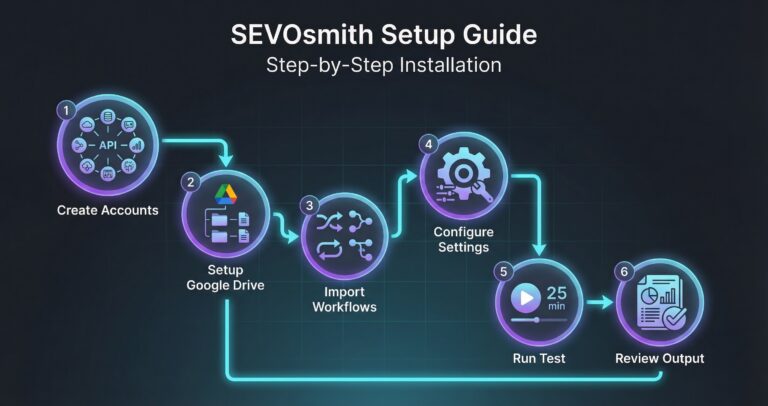
Step 2: Generate and encode credentials. In your dashboard, locate your API login and password. Encode these using Base64 format: base64_encode(login:password). Most programming languages have built-in functions for this encoding. The diagram below illustrates this process.
Step 3: Test in the Sandbox. The Sandbox environment provides “a technical environment for developers where the DataForSEO API can be used without incurring expenses.” This mirrors production behavior with sample data, letting you validate your code before spending credits.
Step 4: Make your first production call. Once your integration works in Sandbox, switch to production endpoints and begin consuming real data. Monitor your credit balance in the dashboard as you scale usage.
Mapping SEO Requests to DataForSEO Endpoints
One of the most practical questions developers face is: “Which endpoint do I call for this specific SEO task?” The following mapping connects common requirements to their corresponding DataForSEO solutions.
| Common SEO Task | Recommended Endpoint | Example Request | Credits per Call |
|---|---|---|---|
| Get keyword search volume | Keywords Data API > Search Volume | POST /v3/keywords_data/google/search_volume/live | ~$0.05/1,000 keywords |
| Track ranking positions | SERP API > Regular Search | POST /v3/serp/google/organic/live/regular | ~$0.0015 |
| Analyze backlink profile | Backlinks API > Backlinks | POST /v3/backlinks/backlinks/live | ~$0.002 |
| Find competitor keyword gaps | DataForSEO Labs API > Keyword Gap | POST /v3/dataforseo_labs/google/keyword_gap/live | Varies |
| Pull Google Business reviews | Business Data API > Google Reviews | POST /v3/business_data/google/reviews/live | ~$0.002 |
The DataForSEO Labs API is “a specialized tool designed to provide data for keyword research, competitor intelligence, and market analysis.” This makes it particularly valuable for strategic planning tasks that require cross-referencing multiple data sources.
For custom integrations, you can also add the official DataForSEO API Schema from their GitHub repository. This provides type definitions and request/response structures for popular programming languages, reducing integration time and preventing common errors.
Pricing, Reviews, and Value Proposition
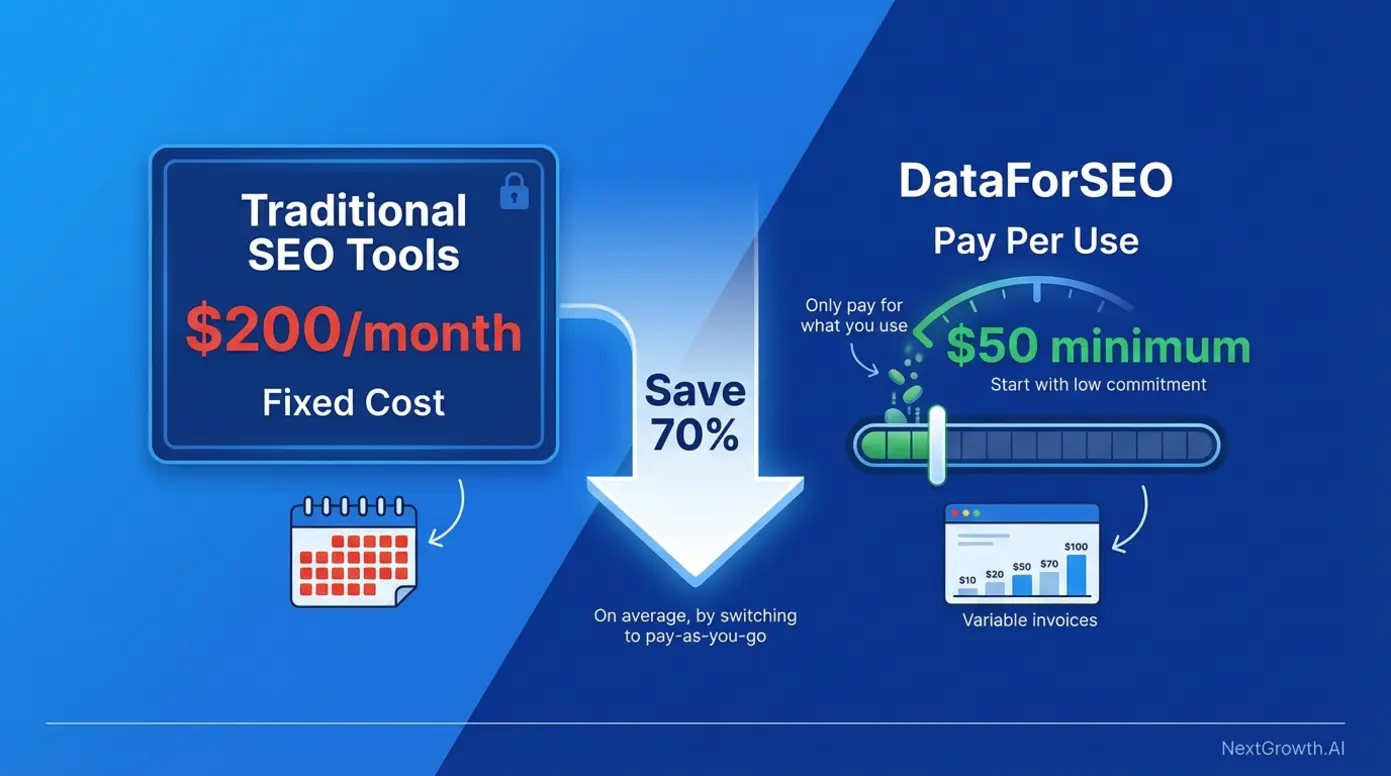
DataForSEO operates on a pay-as-you-go model with no monthly subscription lock-in. According to the official pricing page, “DataForSEO utilizes a pay-as-you-go pricing model with a minimum payment amount of $50. This model is designed to help customers minimize costs by paying only for the individual services they consume.”
This approach fundamentally changes the economics of SEO data access. Instead of committing to $99, $199, or $449 monthly regardless of actual usage, you load credits and spend them as needed. For projects with variable data requirements—seasonal businesses, client-dependent agencies, or development teams in build phases—this flexibility translates to significant cost savings.
The credit system works simply: different API endpoints have different per-request costs, and your balance decrements with each call. Credits never expire, so there’s no pressure to use them within a billing cycle. This makes DataForSEO particularly attractive for intermittent use cases where subscription tools would charge full monthly fees for minimal usage.
User reviews consistently highlight three themes: data accuracy, pricing flexibility, and support quality. The synthesis across review platforms reveals a platform that delivers on its core promises while maintaining responsive customer service—a combination that explains its 2,000+ customer base.
Pay-As-You-Go Pricing Model Explained
Understanding DataForSEO pricing requires grasping the credit system mechanics. Here’s how costs break down across major API categories.
| API | Cost per Request | Monthly Cost (1,000 requests) | Monthly Cost (10,000 requests) |
|---|---|---|---|
| SERP API (Regular) | $0.0015 | $1.50 | $15.00 |
| Keywords Data API | $0.05/1,000 keywords | $0.05 | $0.50 |
| Backlinks API | $0.002 | $2.00 | $20.00 |
| On-Page API | $0.001 | $1.00 | $10.00 |
| Business Data API | $0.002 | $2.00 | $20.00 |
The SERP API pricing page confirms that you don’t have to pay for testing: “No, you don’t have to pay…the Sandbox feature for free.” This means development costs are essentially zero until you’re ready for production data.
For high-volume users, DataForSEO offers volume discounts and enterprise pricing. Teams processing millions of requests monthly can negotiate custom rates that further reduce per-call costs. The $50 minimum payment covers substantial testing and initial production use for most projects.
Cost Comparison: DataForSEO vs. Semrush vs. Ahrefs
The real value of DataForSEO’s pricing model becomes clear when comparing equivalent tasks across platforms. Let’s examine three common scenarios.
| Use Case | DataForSEO Est. Cost | Semrush Plan/Cost | Ahrefs Plan/Cost | Potential Savings |
|---|---|---|---|---|
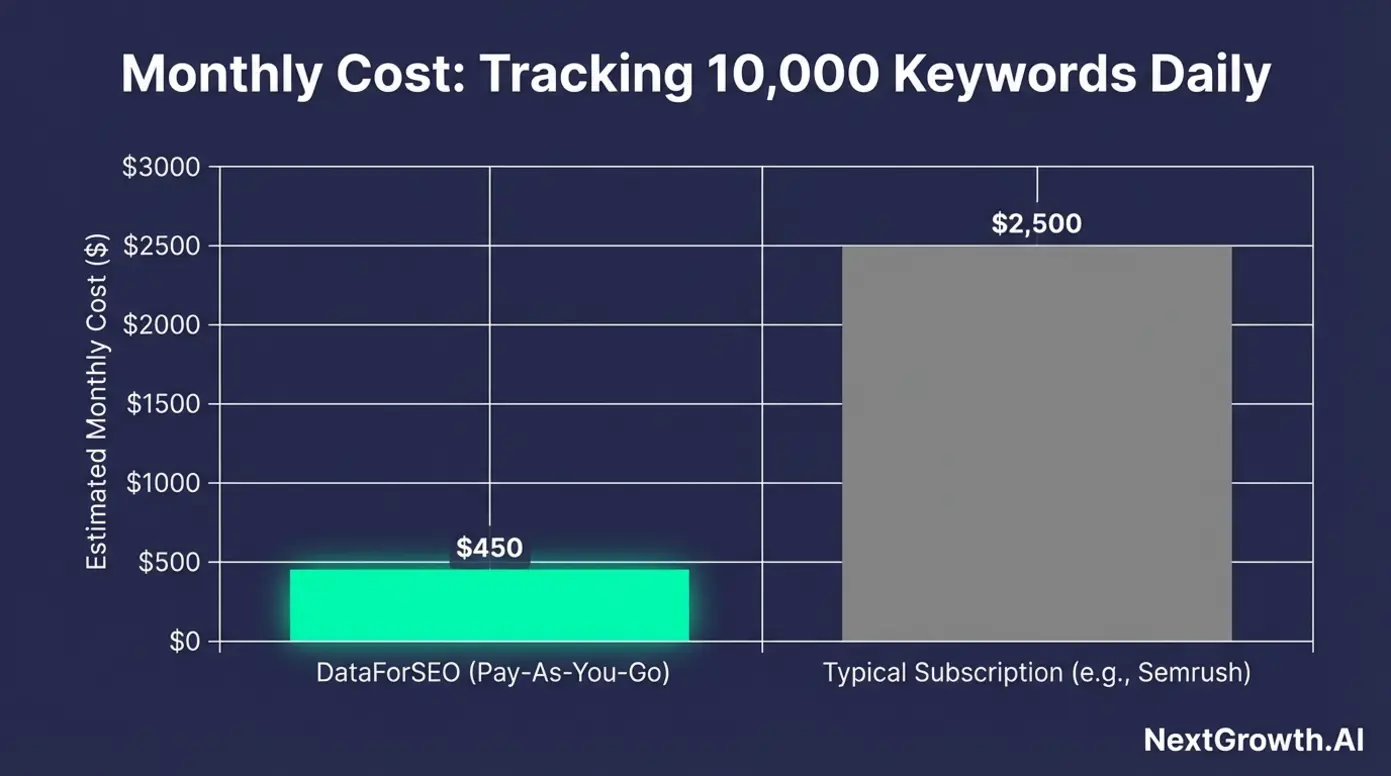
| Track 10,000 keywords monthly | ~$15 (SERP API) | Pro $139.95/mo (500 keywords) or Business $499.95/mo | Lite $129/mo (750 keywords) or Standard $249/mo | 70-90% vs. subscriptions |
| 50,000 backlink lookups monthly | ~$100 (Backlinks API) | Included in subscription | Included in subscription | Varies by total usage |
| 10,000 keyword volume lookups | ~$0.50 (Keywords Data API) | Included in subscription | Included in subscription | Significant for single-task needs |
The chart below illustrates the potential savings when using DataForSEO for high-volume tasks.
Important disclaimer: Prices change frequently. Verify current rates on official websites before making decisions. The comparison above reflects publicly available pricing as of December 2025 and may not include promotional offers or enterprise discounts.
The cost advantage is most pronounced for users who need specific data types rather than full-platform access. If you’re building a rank tracker and only need SERP data, paying $15 monthly beats $139+ subscriptions for tools you won’t use.
What Users Are Saying: Aggregated Review Analysis
Across professional review platforms, DataForSEO maintains strong ratings with consistent feedback themes. TrustRadius reviews indicate that “Overall, DataForSEO seems to be…insights and exceptional customer service.”
- Commonly praised features:
- Data accuracy and freshness compared to alternatives
- Responsive customer support with technical expertise
- Pricing flexibility that scales with actual usage
- Comprehensive documentation and developer resources
- Common criticisms noted by users:
- Data retrieval times can vary for high-volume requests
- Occasional data discrepancies requiring verification
- Learning curve for non-technical users without API experience
- Minimum $50 payment may exceed needs for very small projects
One user quote captures the sentiment well: “Superior accuracy of data, affordability, truly helpful and caring support – these are the main points which make DataForSEO stand out…” This reflects the consensus across agencies, developers, and enterprise teams who’ve integrated the platform into their workflows.
The balance of reviews suggests DataForSEO delivers strong value for its target audience—technically capable users who prioritize data access over GUI convenience—while acknowledging it may not suit everyone.
Specialized Products: MCP Server & DataForSEO Labs
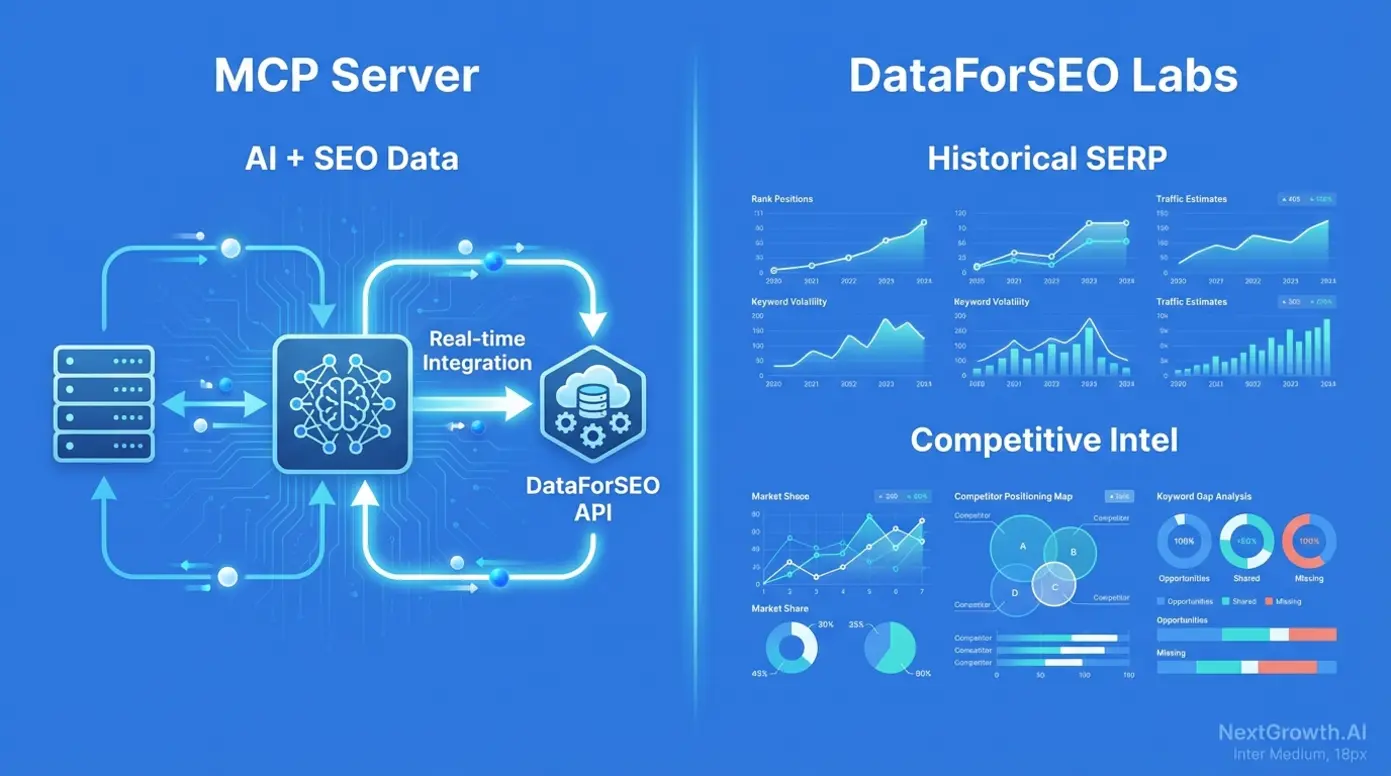
Beyond standard APIs, DataForSEO offers specialized products addressing advanced use cases that traditional SEO tools don’t serve. Two products stand out for their relevance to AI-era SEO workflows: the MCP Server and DataForSEO Labs.
The Model Context Protocol (MCP) Server represents DataForSEO’s response to the growing integration between AI models and SEO data. As large language models become central to content creation and analysis workflows, the ability to feed them real-time SEO data becomes increasingly valuable. The MCP Server bridges this gap.
DataForSEO Labs provides experimental and advanced analytics capabilities beyond standard API offerings. This includes historical SERP data, competitive intelligence tools, and large-scale keyword analysis features designed for strategic planning rather than day-to-day operations.
Both products serve users who’ve outgrown basic API access and need deeper analytical capabilities or cutting-edge AI integrations.
DataForSEO MCP Server: Bridging AI and SEO Data
The Model Context Protocol (MCP) is an emerging standard for connecting AI models to external data sources. DataForSEO’s MCP Server implementation enables direct integration between AI assistants—like ChatGPT or Claude—and real-time SEO data.
The official setup guide provides step-by-step instructions for “setting up the official DataForSEO MCP server, which is designed to bridge the gap between AI models and SEO data.” This positions DataForSEO as infrastructure for AI-powered SEO workflows.
- Practical use cases include:
- Building custom GPTs that can pull live keyword data during conversations
- Creating AI agents that monitor rankings and alert on changes
- Developing content optimization tools that reference real SERP data
- Automating competitive analysis with AI-generated insights
- Basic setup involves:
- Cloning the MCP server from the official GitHub repository
- Configuring your DataForSEO API credentials
- Connecting the server to your AI model’s context window
- Testing queries that combine natural language with SEO data retrieval
The MCP Server is particularly relevant given the 633% year-over-year growth in AI-related search queries. As more SEO workflows incorporate AI assistants, having native integration with SEO data sources becomes a competitive advantage.
DataForSEO Labs: Experimental Tools for Competitive Intelligence
DataForSEO Labs is “a specialized tool designed to provide data for keyword research, competitor intelligence, and market analysis, leveraging large-scale historical SERP and keyword data.”
- Key capabilities include:
- Keyword Gap Analysis: Identify keywords your competitors rank for that you don’t, with volume and difficulty metrics for prioritization
- Competitor Research: Analyze domain-level performance metrics, traffic estimates, and ranking distributions
- Domain Analytics: Deep-dive into any domain’s SEO footprint with historical trend data
- Historical SERP Data: Access past search results to identify ranking patterns and algorithm impact
- Practical applications for agencies and enterprise teams:
- Client pitch preparation with competitive gap analysis
- Market opportunity sizing based on search demand trends
- Content strategy development using competitor keyword mapping
- Algorithm update impact assessment using historical comparisons
Labs data tends to be more expensive per request than standard APIs, reflecting the computational complexity of large-scale analysis. However, for strategic planning tasks, the insights often justify the additional cost compared to manual research alternatives.
No-Code Integrations & Workflow Automation
You don’t need to write code to leverage DataForSEO’s data. The platform integrates with popular workflow automation tools, making real-time SEO data accessible to marketers, analysts, and small teams without developer resources.
This accessibility matters because SEO data has traditionally been locked behind either expensive subscriptions or technical API integration barriers. No-code platforms like Make.com remove the technical barrier while maintaining the cost advantages of pay-as-you-go pricing.
The integration ecosystem connects DataForSEO to over 3,000 applications. You can pull keyword data into Google Sheets, trigger Slack alerts when rankings change, update CRM records with SEO metrics, or feed data into custom dashboards—all without writing a single line of code.
For teams evaluating workflow automation, DataForSEO’s native integrations provide a practical entry point to API-powered SEO data without the traditional development overhead.
Make.com Integration: Pre-Built SEO Workflows
Make.com (formerly Integromat) offers the most comprehensive no-code integration with DataForSEO. The official integration enables you to “supercharge your lead management funnel by integrating…and other CRMs with ingenious Make templates.”
- Popular pre-built workflow templates include:
- Automated daily rank tracking with Google Sheets logging
- Competitor keyword monitoring with email alerts
- New backlink detection with Slack notifications
- Keyword research pipelines feeding content calendars
- SERP feature monitoring for AI Overview appearances
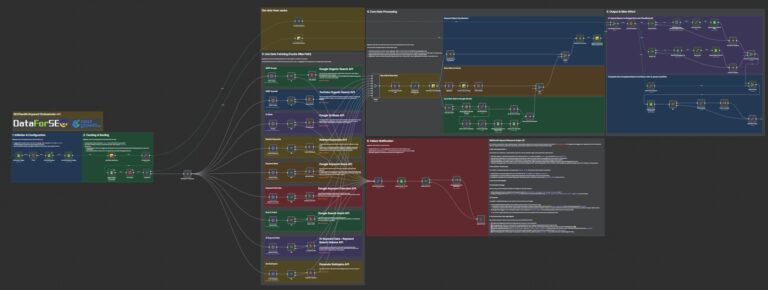
An example of an automated workflow is shown in the diagram below.
The Make.com connection opens DataForSEO data to the broader app ecosystem. You can seamlessly integrate SEO metrics with HubSpot, Salesforce, Airtable, Notion, and thousands of other tools your team already uses.
Setup typically takes 15-30 minutes: connect your DataForSEO account via API credentials, select a template or build a custom scenario, configure triggers and actions, then activate. Make.com handles the API calls behind the scenes while you work with a visual workflow builder.
Building Custom Automations Without Code
Beyond Make.com, several platforms support DataForSEO integration for teams preferring alternatives.
n8n provides an open-source option for organizations requiring self-hosted automation. For teams already understanding workflow automation platforms, n8n offers similar visual workflow building with additional control over data handling and hosting.
Zapier compatibility depends on custom webhook configurations since DataForSEO doesn’t have a native Zapier app. Technical users can bridge the gap using Zapier’s webhook triggers and DataForSEO’s REST endpoints.
- When choosing between platforms:
- Make.com: Best for native integration, pre-built templates, and ease of use
- n8n: Best for self-hosting requirements, open-source preferences, and complex logic
- Zapier: Best for teams already invested in the Zapier ecosystem willing to configure webhooks
The broader ecosystem of 3,000+ apps means your DataForSEO data can flow anywhere your business processes require—from project management tools to client portals to custom databases.
Google Sheets & ChatGPT Integration Tutorials
For the most accessible entry point, Google Sheets and ChatGPT integrations let you pull SEO data without any automation platform.
- Google Sheets integration works through custom functions or Apps Script:
- Create a new Google Sheet for your SEO data
- Use Apps Script to write a custom function calling DataForSEO endpoints
- Pass keywords or URLs as cell references
- Receive real-time SEO data directly in your spreadsheet
This approach suits analysts who prefer spreadsheet-based workflows and want to combine DataForSEO metrics with existing data models.
- ChatGPT Custom GPT integration enables conversational SEO analysis:
- Create a Custom GPT in ChatGPT
- Configure Actions to call DataForSEO endpoints
- Define conversation patterns for SEO queries
- Query rankings, keywords, or backlinks through natural language
For teams already building an automated keyword research engine, these integrations extend capabilities without additional infrastructure. The combination of real-time SEO data with AI-powered analysis opens new workflows that weren’t practical with traditional tools.
Real-World Results: Case Studies & ROI
Real businesses have achieved measurable results with DataForSEO, moving beyond theoretical benefits to documented outcomes. These case studies demonstrate the platform’s impact across different use cases and company sizes.
The pattern across successful implementations reveals common themes: cost reduction compared to subscription alternatives, time savings through automation, and revenue growth enabled by better data access. Understanding these outcomes helps evaluate whether DataForSEO fits your specific situation.
Case studies matter particularly during evaluation because they translate features into business impact. Knowing that an API exists is different from knowing that companies have used it to grow customer bases or cut reporting time significantly.
Twinword: 35% More Paid Customers After Switching
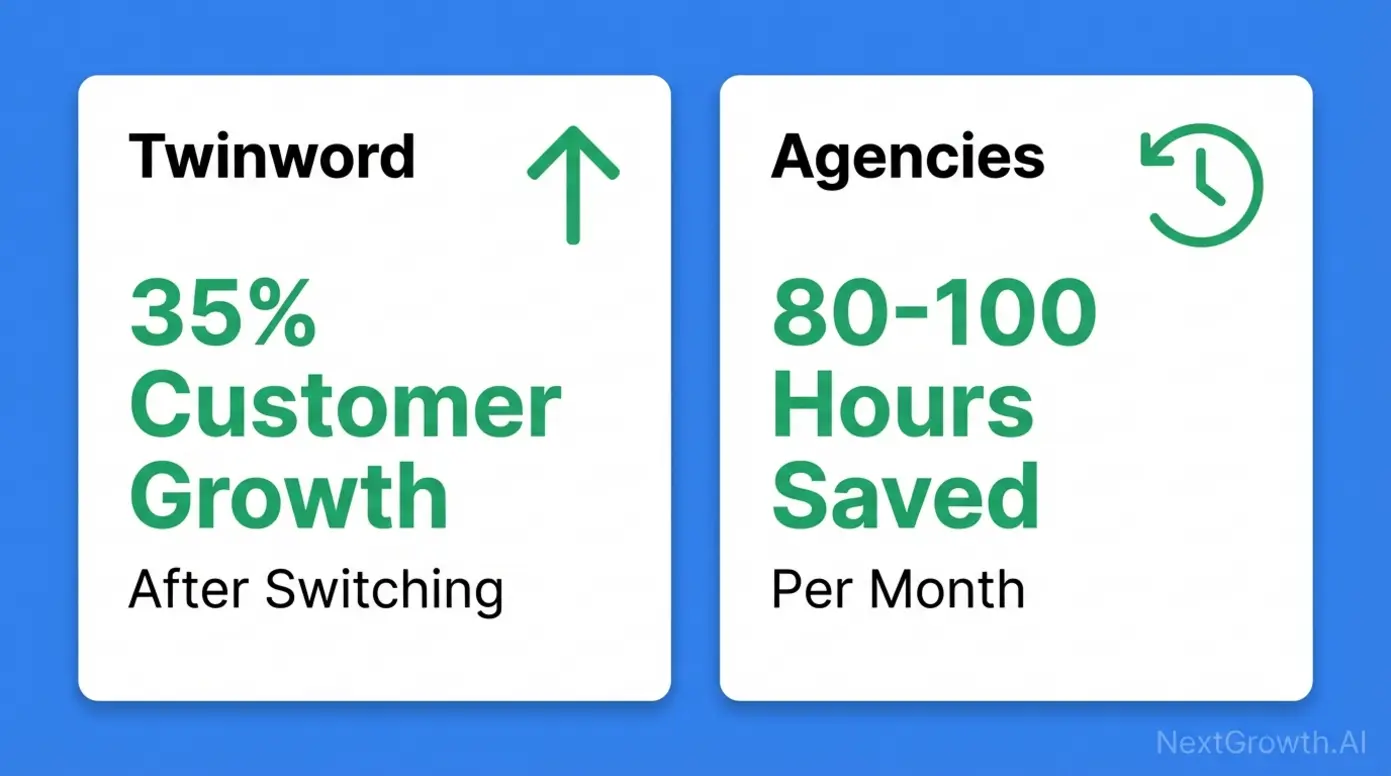
Twinword, an AI-powered keyword research tool, provides one of the most documented DataForSEO success stories. According to the official case study, the company achieved “35% more paid customers after switching to DataForSEO APIs.”
- Company background: Twinword, an AI-powered keyword research tool, provides one of the most documented DataForSEO success stories. According to the official case study, the company achieved “35% more paid customers after switching to DataForSEO APIs.”
- Challenge faced: Their previous data provider created limitations around server capacity and development speed. Reliability issues affected their ability to serve customers consistently.
- Why they chose DataForSEO: The switch addressed core concerns—reliable infrastructure, no server capacity worries, and rapid development possibilities. The API-first architecture aligned with their technical approach.
- Specific results achieved:
- 35% increase in paid customer conversions
- Eliminated server capacity concerns
- Accelerated development cycles for new features
- Improved data reliability for end users
This case demonstrates DataForSEO’s value for SaaS companies building on top of SEO data. The infrastructure reliability translates directly to product quality and customer satisfaction.
Agency Use Case: Cutting Report Generation Time
Agencies face a common challenge: generating client reports consumes significant time that could go toward strategic work. The DataForSEO use cases blog documents numerous agency implementations addressing this pain point.
- Typical agency challenge: Manual report generation requires logging into multiple tools, exporting data, formatting spreadsheets, and compiling insights. This process can take hours per client, repeated monthly.
- How SERP API integration solves this: Automated data pulls replace manual exports. Rankings, keyword positions, and competitive metrics flow directly into reporting templates. What took hours becomes minutes.
- Time savings commonly reported: Agencies document reducing report generation from 4-6 hours to under 30 minutes per client. For agencies with 20+ clients, this represents 80-100+ hours monthly redirected to billable work.
- Cost reduction compared to traditional tools: Pay-as-you-go pricing often undercuts subscription costs for agencies with variable client loads. Seasonal fluctuations don’t require maintaining expensive subscriptions during slow periods.
These comprehensive data solutions enable agencies to scale client services without proportionally scaling reporting overhead—a direct competitive advantage in a margin-sensitive industry.
When DataForSEO May Not Be the Right Fit
No tool serves every use case perfectly, and DataForSEO is no exception. Understanding its limitations helps you make an informed decision about whether the platform matches your specific requirements.
Honest assessment of limitations actually builds trust—it demonstrates that the platform’s strengths are genuine rather than marketing hyperbole. The goal is matching the right tool to the right use case, not convincing everyone to adopt a single solution.
Limitations and Alternative Considerations
- Learning curve for non-technical users: DataForSEO is built API-first, which means users without development experience face a steeper learning curve than GUI-based tools. While no-code integrations exist, they require understanding workflow automation concepts. If you prefer clicking through a dashboard to typing API calls, traditional tools like Semrush may better suit your workflow.
- Minimum payment threshold: The $50 minimum payment, while reasonable for ongoing projects, may exceed needs for very small or one-time tasks. If you only need to check rankings for 10 keywords once, free tools or trial accounts at subscription services might be more practical.
- Data retrieval timing: Some users report variable response times for high-volume requests, particularly during peak usage periods. For applications requiring guaranteed sub-second responses, this variability may require architectural considerations like caching or queuing.
- When to consider alternatives: If you need an all-in-one SEO platform with built-in reporting dashboards, tools like Semrush or Ahrefs may better suit your workflow. Their subscription model includes features like site audits, content optimization tools, and pre-built reports that DataForSEO doesn’t provide—you’d need to build those yourself.
- For one-time projects: Consider free tools first. Google Search Console, Ubersuggest’s free tier, or trial accounts at major platforms may cover your needs without any payment.
- For enterprise needs: Request custom pricing. High-volume users can negotiate rates that further improve the cost equation, and enterprise support options address reliability requirements.
Who Should Consider Traditional SEO Tools Instead
DataForSEO isn’t the optimal choice for everyone. The following profiles typically find better fits with subscription-based platforms:
- Solo marketers who prefer visual dashboards: If you work best with point-and-click interfaces and pre-built reports, Semrush or Ahrefs deliver better user experiences for non-technical workflows
- Teams without developer resources for integration: While no-code options exist, maximizing DataForSEO’s value typically requires some technical capability for custom implementations
- Users who need built-in reporting templates: Subscription platforms include ready-made client reports, competitor analysis templates, and presentation-ready outputs that DataForSEO requires you to build
The right choice depends on your technical capabilities, budget structure, and workflow preferences. DataForSEO excels for technically capable users who value flexibility and cost control. Traditional tools excel for users who value convenience and comprehensive feature sets.
Frequently Asked Questions
Is DataForSEO good?
Yes, DataForSEO is widely regarded as an excellent and cost-effective solution for businesses and developers needing real-time SEO data. User reviews consistently praise its data accuracy, flexible pay-as-you-go pricing, and responsive customer support. The platform serves over 2,000 companies globally. Common use cases include building custom SEO tools, automating rank tracking, and powering agency reporting systems. Results may vary based on specific use case and technical requirements.
What data can you get from DataForSEO?
DataForSEO provides comprehensive SEO data via 50+ APIs, including SERP results, keyword metrics, backlink data, business listings, and on-page audit information. The SERP API delivers real-time search results from Google, Bing, Yahoo, and other engines. The Keywords Data API provides search volume, competition scores, and keyword suggestions. Additional APIs cover backlinks (referring domains, anchor text), Google Business Profile data, and technical SEO audits.
Is DataForSEO free?
DataForSEO is not free, but it offers an unlimited trial period with a $1 credit for new users to test the APIs. The service operates on a pay-as-you-go model with no monthly subscription fees. The minimum payment amount is $50, and credits never expire. A free Sandbox environment allows developers to test API functionality without consuming credits.
What are the advantages of using DataForSEO?
Key advantages of DataForSEO include flexible pay-as-you-go pricing, real-time location-specific data, and seamless no-code integrations with platforms like Make.com. Users only pay for the data they consume, avoiding expensive monthly subscriptions. The platform supports multi-search engine data collection and offers a transparent API architecture. Case studies report results like 35% customer growth and significant time savings on reporting tasks.
What are DataForSEO’s competitors?
DataForSEO’s main competitors include Semrush, Ahrefs, Moz, and SEO PowerSuite, though these tools differ significantly in pricing model and target audience. Unlike DataForSEO’s API-first, pay-as-you-go approach, competitors like Semrush and Ahrefs offer subscription-based all-in-one platforms with built-in dashboards. For API-specific alternatives, some users also consider SerpApi or custom scraping solutions. The best choice depends on whether you need raw API access or a complete SEO platform.
Your Next Steps with DataForSEO
DataForSEO offers a comprehensive API stack covering all major SEO data needs—from SERP tracking to keyword research to backlink analysis. The pay-as-you-go model provides measurable cost advantages for high-volume users who would otherwise pay subscription premiums for features they don’t use. No-code integrations through Make.com and similar platforms make this data accessible beyond just developers. And real case studies demonstrate measurable ROI, including 35% customer growth for companies building on the platform.
For developers and marketers evaluating SEO data solutions, DataForSEO represents a fundamentally different approach: infrastructure rather than application, flexibility rather than bundling, and cost tied to actual usage rather than fixed monthly fees. This model rewards efficiency and scales with your actual needs.
Ready to explore? Start by signing up for a free account to access the $1 trial credit. Test the Sandbox environment to explore API functionality risk-free—you can validate your integration approach without spending anything. Then explore the Make.com integration templates to build your first automated workflow, whether that’s daily rank tracking, competitor monitoring, or keyword research pipelines feeding your content strategy.